
Fundamentals of the AC Motor Soft Starter
When an AC induction motor is switched directly onto full line voltage, it acts almost like a transformer with a short-circuited secondary winding. This direct-on-line (DOL) starting condition generates massive inrush current spikes—typically 700% to 1,000% of the motor’s full load current (FLA). On high-efficiency motors, this surge can reach up to 15 times the normal running current.
Along with electrical current surges, starting torque transients can spike up to 300% of standard running torque. This instantaneous mechanical thump stresses drive shafts, shears keyways, stretches drive belts, and causes severe mechanical strain throughout connected equipment.
An AC motor soft starter smooths this transition using solid-state electronics, specifically silicon-controlled rectifiers (SCRs). By controlling the precise point in the AC voltage waveform where these SCRs turn on, the device controls the root-mean-square (RMS) voltage applied to the motor terminals. Ramping the voltage up slowly limits both electrical current and starting torque, allowing the motor to accelerate smoothly up to operating speed.
For facilities managing complex plant machinery, integrating soft starters alongside modern Drives and Controls creates an optimal balance between electrical efficiency and mechanical longevity.
Comparing an AC Motor Soft Starter to VFDs and Hard Start Kits
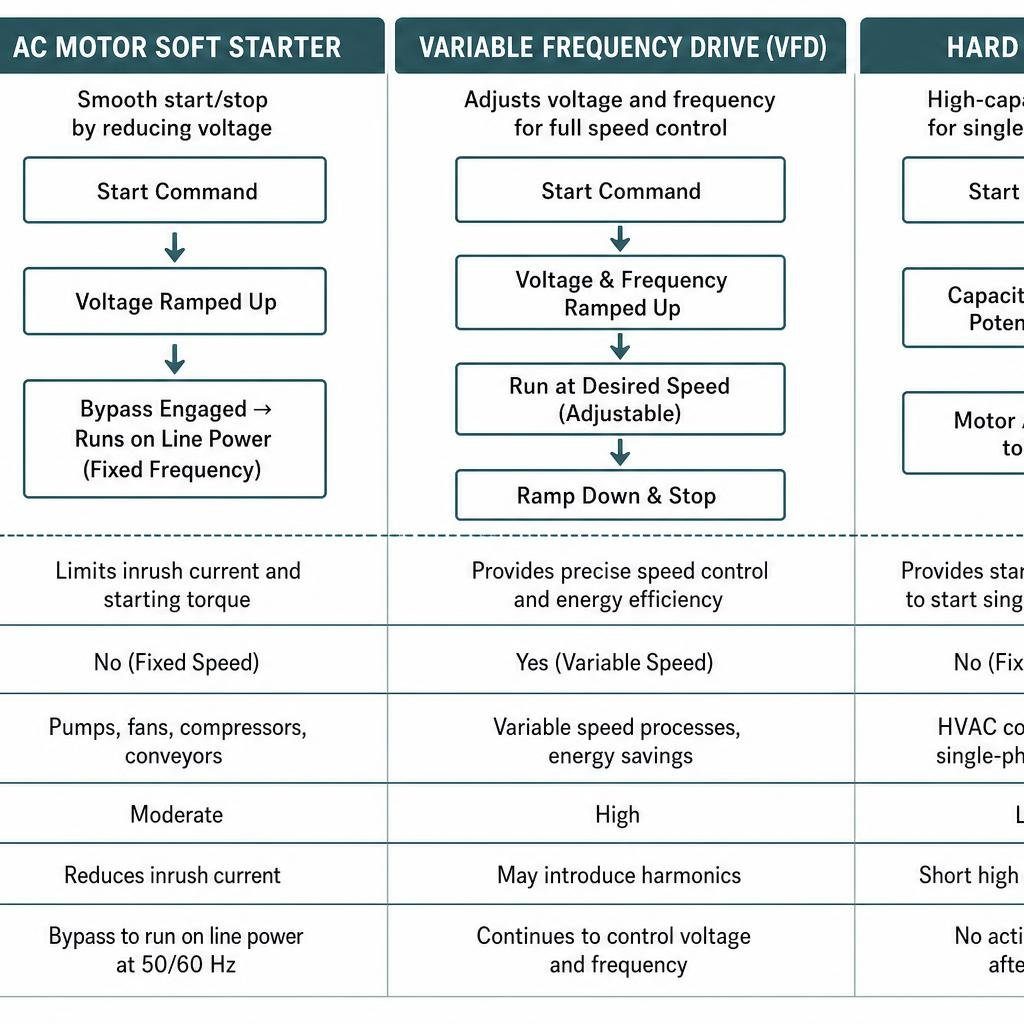
It is common to compare soft starters to Variable Frequency Drives (VFDs) and hard start kits, but each device performs a fundamentally different job:
- AC Motor Soft Starter: Manages current and torque during startup and shutdown ramps by reducing voltage. Once at rated speed, it typically hands operation over to a bypass contactor and runs the motor directly on line power at fixed frequency (50/60 Hz).
- Variable Frequency Drive (VFD): Adjusts both the voltage and frequency supplied to the motor. This allows continuous speed regulation across the motor’s entire operational cycle, providing precise control and energy efficiency at partial speeds. However, VFDs carry higher initial costs and introduce extra electrical noise (harmonics).
- Hard Start Kit: Uses a starting capacitor paired with a potential relay to jump-start single-phase compressor motors. Rather than reducing voltage to soften the start, it delivers a short high-capacitance current boost to maximize torque and force a stubborn motor up to speed quickly.
| Feature / Capability | AC Motor Soft Starter | Variable Frequency Drive (VFD) | Hard Start Kit |
|---|---|---|---|
| Primary Function | Reduced-voltage startup & soft stop | Continuous speed & torque regulation | High-torque capacitive start boost |
| Output Frequency Control | Fixed mains frequency (50/60 Hz) | Variable frequency (0–400+ Hz) | Fixed mains frequency (50/60 Hz) |
| Inrush Current Reduction | Up to 75% reduction | Up to 80–90% reduction | Minimal to none (increases start torque) |
| Speed Control During Run | No | Yes (full dynamic range) | No |
| Relative Equipment Cost | Moderate | High | Low |
| Harmonic Distortion (Run) | None (when bypassed) | Requires filtering/reactors | None |
Working Principle of Thyristor Phase-Angle Control
Modern solid-state soft starters rely on pairs of silicon-controlled rectifiers (thyristors) connected in back-to-back anti-parallel alignment for each phase.
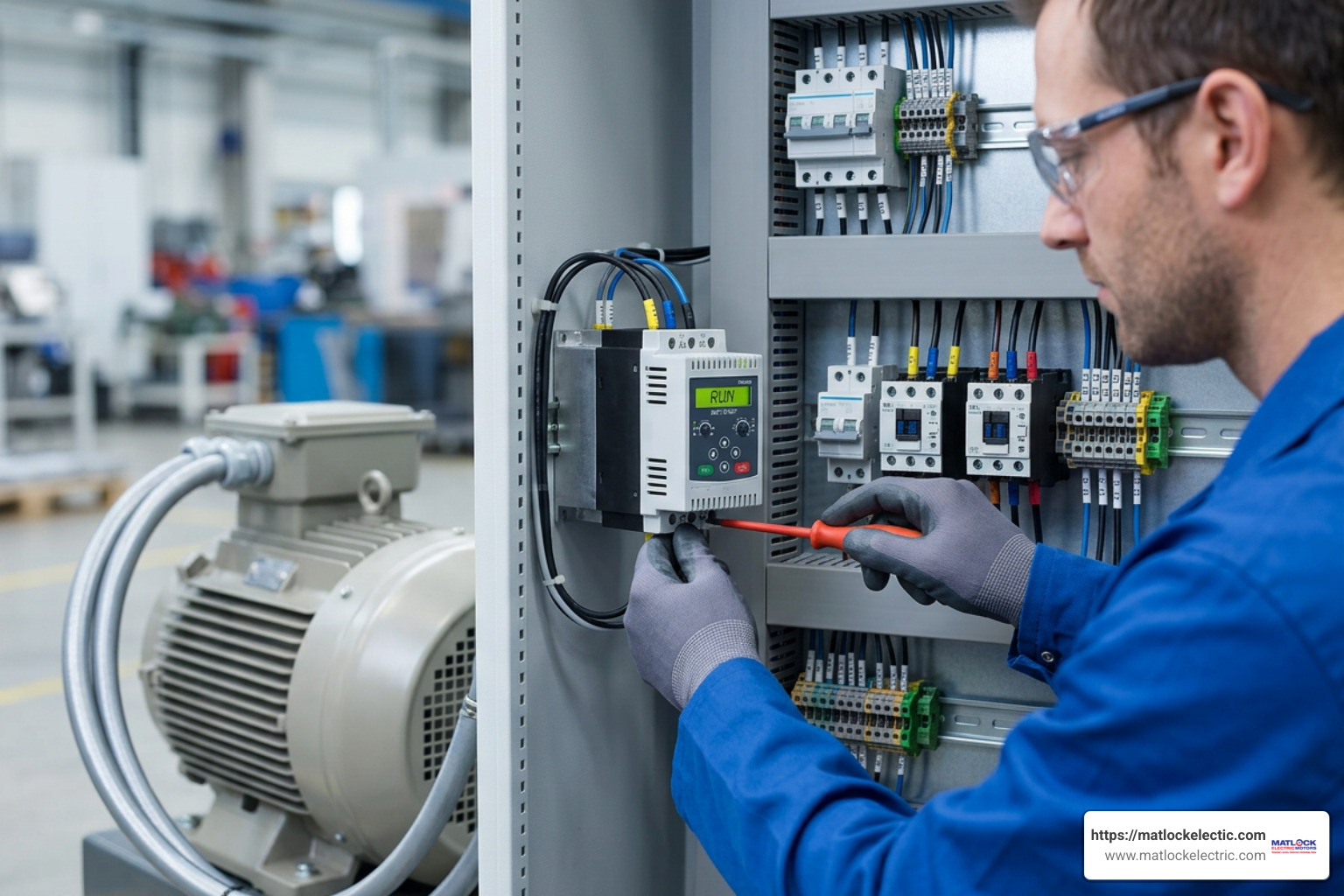
By adjusting the SCR firing angle (conduction angle) during each half-cycle of the sine wave, the soft starter clips the incoming AC voltage wave.
- Initial Ramp: At the moment of starting, the gate circuits fire the SCRs late in the electrical phase cycle, admitting only a small slice of the voltage waveform (e.g., 30% to 40% starting voltage).
- Voltage Ramping: Over a user-defined acceleration time (typically 0.5 to 60 seconds), the gate timing shifts continuously earlier in each cycle, steadily increasing the RMS voltage delivered to the motor.
- Full Conduction: When the motor reaches full operating speed, the SCRs fire at full conduction angle (100% voltage). At this point, many units close internal bypass contactors to divert running current around the SCR assembly, minimizing heat generation.
During SCR voltage ramping, the phase-angle clipping introduces transient harmonic distortion into the electrical lines. However, because starting ramps last only a few seconds, total harmonic distortion remains temporary and stops entirely once the motor reaches full speed or switches to bypass mode.
Types of Soft Starters and Wiring Topologies
Industrial installations choose between electromechanical starting methods and solid-state electronics based on performance demands and space constraints.
Solid-State, Wye-Delta, Autotransformer, and Resistor Starters
Before solid-state SCR soft starters dominated the market, facilities relied on electromechanical starters to reduce motor voltage:
- Solid-State Starters: Modern electronic starters using SCR phase-angle control. They deliver stepless, smooth acceleration and deceleration curves that can be fine-tuned to match exact load profiles.
- Primary Resistor Starters: Dating back to the early 1900s, these insert heavy series resistors into the stator circuit during start up to drop line voltage. As the motor gains speed, contactors bypass the resistors in steps. They waste considerable energy as heat and offer coarse torque control.
- Autotransformer Starters: Use tapped transformers (typically 50%, 65%, or 80% taps) to supply reduced voltage during acceleration. While effective at reducing line current, they step through speed changes in abrupt jumps rather than a smooth ramp.
- Wye-Delta (Star-Delta) Starters: Require six-lead motors. The starter connects motor windings in a Wye (Star) configuration for acceleration—reducing starting voltage to 58% and torque to 33%—then switches the connection to Delta for normal run mode. Open transition models briefly disconnect the motor during the switch, which can create dangerous current spikes. Closed transition models add temporary resistors to maintain continuity during the transition, preventing sudden current surges.
- Part-Winding Starters: Designed for motors with two separate parallel windings. The starter powers one winding initially to limit starting current, then energizes the second winding a short time later.
Two-phase controlled soft starters manage SCR voltage on only two phases while routing the third phase directly. These units provide a smaller physical footprint for compact enclosures. However, three-phase controlled soft starters manage all three lines, eliminating phase current unbalance and providing smoother torque development on critical heavy-duty loads.
Line Series vs. Inside-Delta Wiring Configurations
Three-phase solid-state soft starters can be wired into power circuits using two primary topologies:
- In-Line Series Configuration: The soft starter connects directly in series between the main power circuit breaker and the three input terminals of the motor. All motor phase current flows directly through the starter contacts. The starter must be sized for 100% of the motor’s rated Full Load Amperes (FLA).
- Inside-Delta Loop Configuration: The soft starter connects inside the delta loop of a 6-lead motor. Because the starter carries only the phase current flowing through individual motor windings—which is $1 / sqrt{3}$ (roughly 58%) of line FLA—a smaller soft starter unit can control a larger motor. This provides significant cost and space savings on high-amperage equipment.
Key System Benefits and Industrial Applications
Installing an AC motor soft starter protects electrical networks and reduces mechanical fatigue across moving machinery.
Water Hammer Prevention in Pumps and HVAC Systems
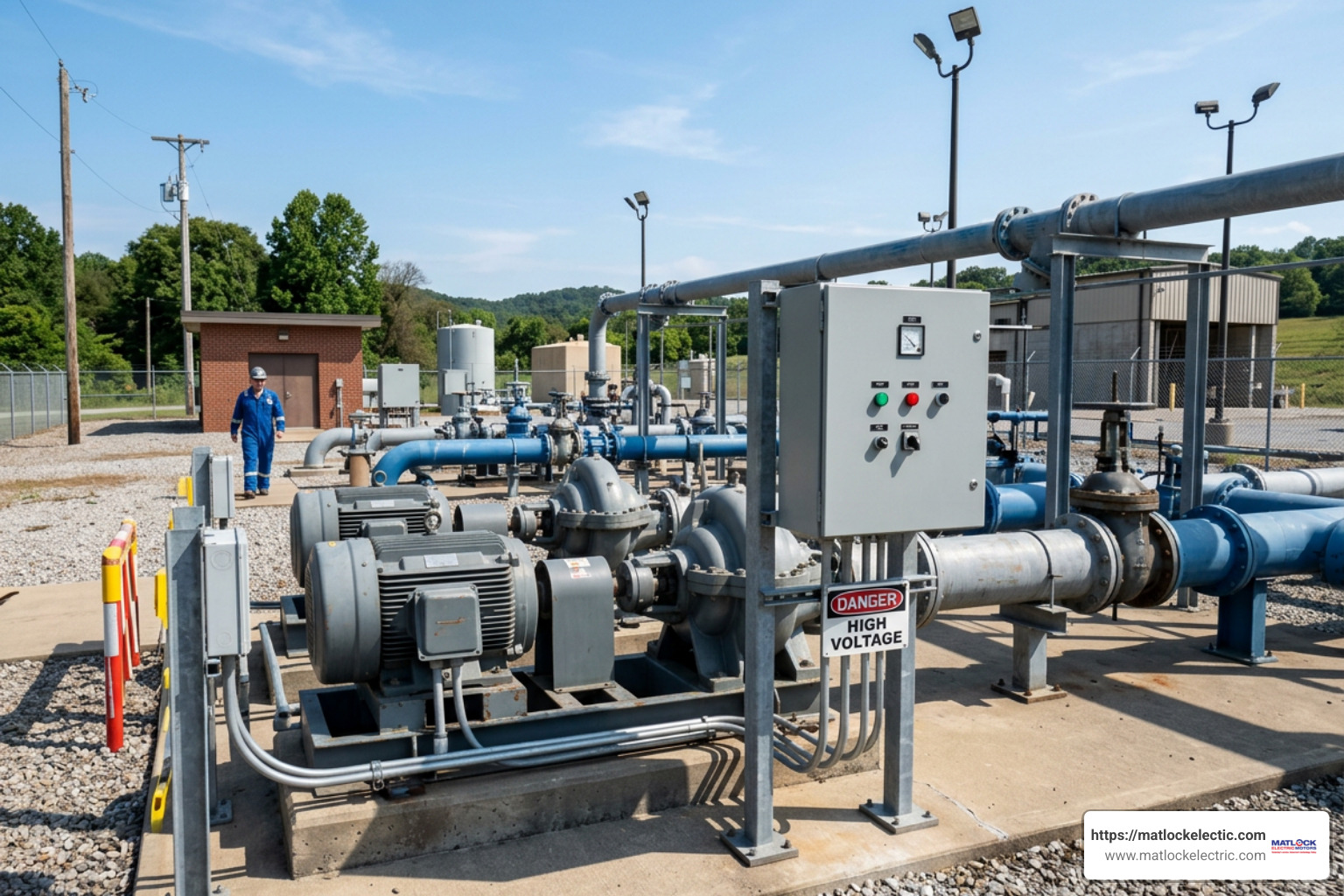
Abrupt stopping of high-flow water pumps creates a destructive hydraulic surge known as water hammer. When a direct-on-line pump stops instantly, fluid momentum slams back against check valves and pipe elbows, causing mechanical shock, pipe rupture, and valve failure.
Advanced soft starters feature specialized torque control deceleration profiles. Instead of cutting power instantly, the starter smoothly ramps down motor torque to keep fluid pressure drops gradual. This stops pressure surges and eliminates water hammer without needing complex control valves.
In commercial HVAC systems, soft starters protect large chillers and refrigeration compressors. By smoothing acceleration torque, they prevent compressor scroll strain, cut cabinet vibration, and reduce light flicker during startup. For existing HVAC installations experiencing startup issues, combining soft starters with expert AC Repairs restores system performance and protects electrical equipment.
High-Inertia Loads, Conveyors, and Off-Grid Power Systems
High-inertia equipment like rock crushers, ball mills, industrial centrifuges, and large fans requires high starting torque to get moving from a dead stop. Modern soft starters offer a kick-start (boost) feature. This delivers a short pulse of full voltage (e.g., 80% to 100% voltage for 0.1 to 2.0 seconds) to break static friction before dropping back to the smooth voltage ramp.
On long conveyor belts, sudden direct-on-line starting jerks the belt, spilling materials, overstressing splices, and slipping drive pulleys. Soft starters eliminate this mechanical jerk by delivering smooth, linear torque acceleration.
Soft starters are especially helpful when running equipment on limited power supplies like diesel generators or solar inverters. Portable generators often stall when hit with standard motor starting currents of 700% FLA. Soft starters cut inrush current by up to 75%, allowing facilities to run industrial pumps and fans on significantly smaller off-grid generators and inverters.
Sizing, Protection, and Essential Accessories
Correctly choosing and protecting an AC motor soft starter ensures reliable equipment performance over long service lifetimes.
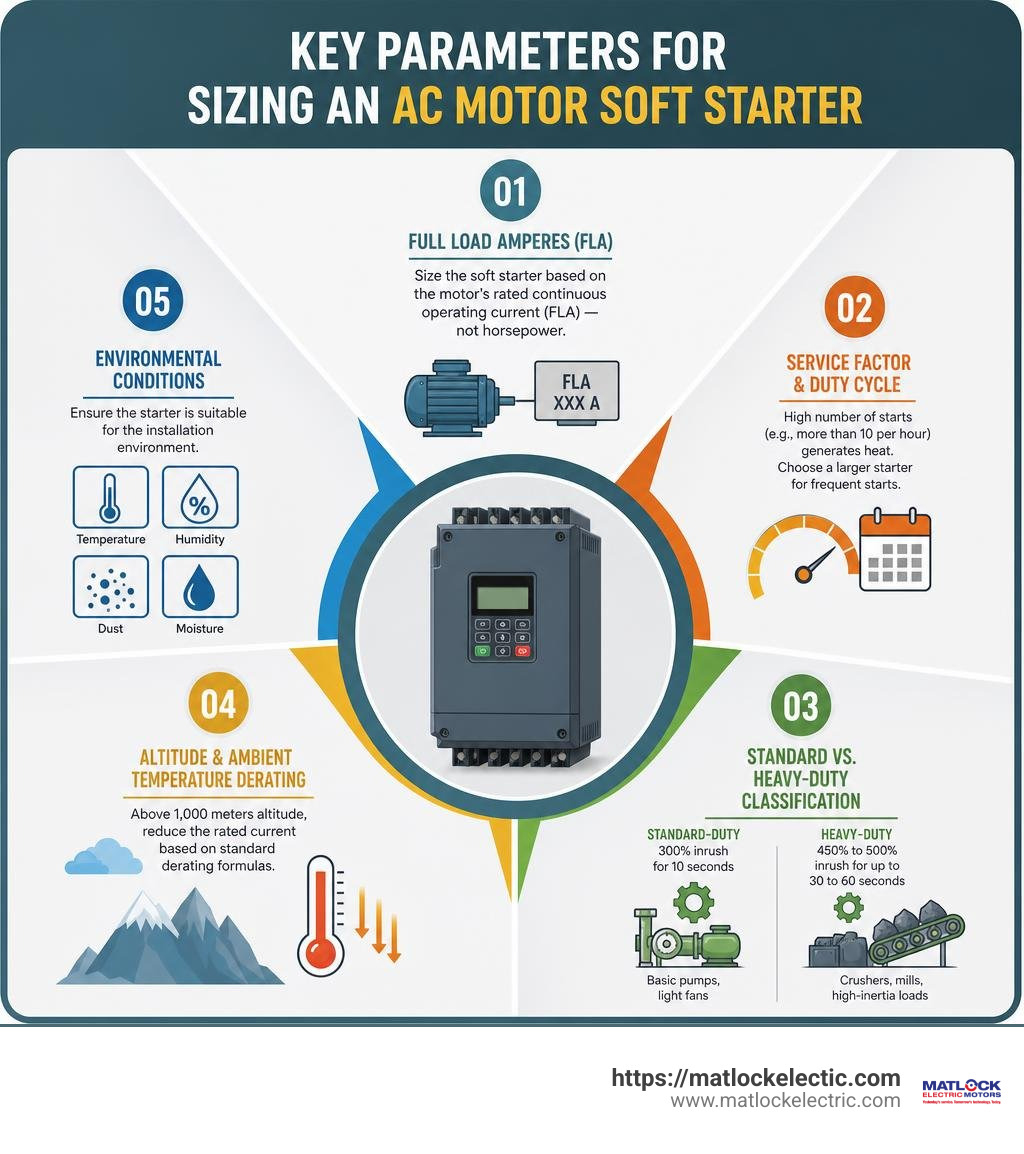
Proper starter sizing requires evaluating motor nameplate data and environmental operating conditions:
- Full Load Amperes (FLA): Select the soft starter by rated continuous operating current rather than horsepower alone.
- Service Factor & Duty Cycle: High starting frequencies (e.g., more than 10 starts per hour) generate excess heat in SCR modules, requiring a larger soft starter model.
- Standard vs. Heavy-Duty Classification: Standard-duty starters handle 300% inrush current for 10 seconds (suitable for basic pumps and light fans). Heavy-duty starters handle 450% to 500% inrush current for up to 30 to 60 seconds (required for crushers, mills, and high-inertia loads).
- Altitude and Ambient Temperature Derating: Above 1,000 meters altitude, reduce rated current according to standard formulas:
$$text{% of } I_e = 100 – frac{text{Altitude (m)} – 1000}{150}$$
Similarly, operating in ambient temperatures between 40°C and 60°C requires derating current capacity by roughly 0.8% to 1.0% per °C.
Inspecting motors with advanced Technology in Diagnostics helps verify insulation health and operational FLA before installing new starters.
Selecting an AC Motor Soft Starter for Single-Phase vs. Three-Phase Motors
While three-phase motors pair easily with soft starters, single-phase motors require special attention:
- Permanent Split Capacitor (PSC) & Shaded Pole Motors: These lack mechanical switches and work well with single-phase SCR soft starters in fan, pump, and small compressor applications.
- Capacitor-Start Induction Motors: These use start capacitors wired through a mechanical centrifugal switch. The switch stays closed until the motor hits roughly 80% of operating speed. If a soft starter ramps voltage down too far, starting torque drops significantly (torque decreases with the square of voltage: $T propto V^2$). The motor may stall or take too long to reach 80% speed, causing start capacitors to overheat or burning out auxiliary windings.
For heavy-duty single-phase starting challenges, retrofitting to a three-phase motor powered by a single-phase-input VFD often delivers better reliability than trying to soft-start a capacitor-start motor.
Safety Features, Thermal Protection, and Peripheral Accessories
Modern digital soft starters include extensive protective monitoring built into their firmware:
- Retentive Thermal Memory: Tracks dynamic motor heating across power interruptions, preventing immediate motor restarts if power returns before windings have cooled down.
- PTC Thermistor Input: Connects directly to motor winding thermistors to trigger protective trips if internal temperatures exceed safe limits.
- Phase Loss and Phase Imbalance Protection: Trips the starter if supply line current imbalance exceeds safe operating levels (typically 20%), protecting motor windings from overheating.
- Internal Bypass Contactors: Automatically close once the motor reaches full operating speed. Routing continuous run current around the SCRs cuts operational heat loss by over 95% (raising operating efficiency up to 99.97%) and eliminates the need for large external heat sinks.
- Peripheral Accessories: Optional add-ons include plug-in fieldbus modules (Modbus RTU, Profibus, DeviceNet), door-mounted HMI keypads, and auxiliary cooling fans for high-ambient panel enclosures.
Frequently Asked Questions About Soft Starters
Can a soft starter adjust motor operating speed during continuous run?
No. An AC motor soft starter controls motor voltage only during startup and shutdown ramps. Once acceleration is complete, the starter delivers 100% line voltage to the motor at fixed line frequency (50/60 Hz). If continuous variable speed control is required, use a Variable Frequency Drive (VFD).
Why do single-phase capacitor-start motors struggle with soft starters?
Capacitor-start single-phase motors rely on a centrifugal switch that must open at ~80% speed to disconnect the start winding and capacitor. Because soft starting lowers initial motor voltage, starting torque drops significantly ($T propto V^2$). This reduced torque can keep the motor from reaching 80% speed quickly, leaving the start capacitor energized too long and risking thermal damage to windings and capacitors.
How does an internal bypass contactor reduce thermal losses?
During startup, SCRs generate heat due to internal semiconductor voltage drops (dissipating roughly 1 to 1.5 Watts per Ampere). Once the motor reaches operating speed, an internal bypass contactor closes parallel contacts around the SCRs. Running current flows through low-resistance mechanical contactor points, dropping steady-state dissipation down to a few Watts. This keeps control panels cooler and extends equipment life.
Conclusion
Installing an AC motor soft starter provides an efficient, cost-effective solution for reducing high electrical inrush currents and mechanical wear across modern industrial facilities. By smoothing initial starting torque and controlling acceleration ramps, soft starters protect drive shafts, belts, and power networks while preventing disruptive pressure surges in piping systems.
At Matlock Electric, our technical team helps industrial facilities select, integrate, and service complete motor control solutions. Whether you need to source robust new industrial motors from our Electric Motor Sales department, troubleshoot complex control panels with our Field Services team, or overhaul critical plant machinery through our mechanical Repair facility, we deliver complete support for your powertrain systems.
Contact Matlock Electric to discover how proper motor selection and smart starters optimize system performance, lower utility demand charges, and extend equipment operating life.