Types of Equipment Handled by Electric Motor Repair Local Specialists
When an electric motor stops turning, your operation comes to a halt. Finding electric motor repair local specialists who understand your specific equipment is essential for getting back online without delay. Modern facilities rely on a diverse range of rotating machinery, each with unique electrical architectures and mechanical demands.
From small single-phase fractional horsepower motors to multi-thousand horsepower industrial giants, experienced technicians handle a wide variety of equipment.
AC and DC Motor Repair Local Services
Alternating current (AC) and direct current (DC) motors remain the workhorses of commercial and industrial facilities. While AC motors are widely used for constant-speed ventilation and pumping, DC motors are favored when high starting torque and precise variable speed control are required.
Understanding the differences of AC DC motors is critical during diagnostics. AC repairs frequently involve inspecting squirrel-cage rotors or rewinding stationary stator coils. Conversely, DC repairs focus heavily on rotating armatures, commutators, carbon brushes, and field coils, which experience elevated mechanical wear over time. Local facilities with dedicated equipment can perform custom shafting, dynamic balancing, and complete insulation restoration for both motor types.
Precision Servo Motor Repair Local Solutions
Automation-heavy environments rely heavily on specialized servo motors and high-speed spindle stators. These motors require far more than basic mechanical refurbishment; they demand extreme precision.
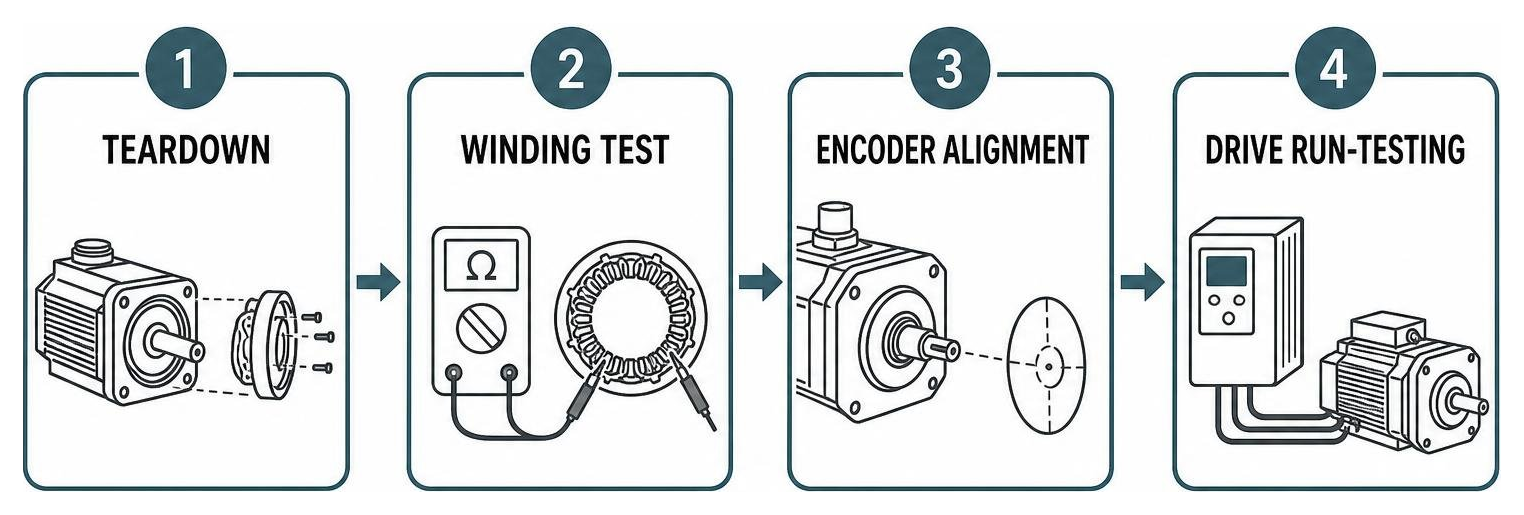
A comprehensive servo motor repair process involves precise feedback device timing, including optical encoders, resolvers, and tachometers. Technicians utilize specialized feedback alignment instruments—such as Heidenhain and Mitchell Electronics systems—to re-align feedback sensors to exact OEM zero-phase angles. Without precise encoder alignment, even a mechanically sound motor will fail to communicate with automated plant controllers.
Pumps, Compressors, and Industrial Gearboxes
Motors rarely work in isolation—they drive complex mechanical systems. Local service centers extend their expertise beyond the motor frame to support integrated rotating assemblies:
- Dewatering and Submersible Pumps: Repairing mechanical seals, impellers, and fluid chambers to protect against moisture intrusion.
- Air Compressors: Rebuilding drive motors and servicing integrated pressure switches and valves.
- Industrial Gearboxes: Replacing worn internal gearing, gear shafts, and high-stress bearings.
- Vacuum Blowers: Rebalancing high-velocity impellers and restoring custom tolerances through specialized machining.
Partnering with experienced motor repair and machining specialists ensures that both the motor and its attached mechanical housing are fully restored to operational standards.
Core Repair and Restoration Services Offered
| Service Type | Key Features | Primary Benefits |
|---|---|---|
| Motor Rewinding | Inverter-duty wire, double-dip varnish, stator bake-out | Restores original electrical capacity; improves heat tolerance |
| Bearing Replacement | Precision fit, high-temp lubrication, vibration checks | Resolves mechanical drag, reduces heat, prevents shaft seizure |
| Custom Machining | Shaft rebuilding, end bell sleeving, welding/fabrication | Eliminates outsourcing delays and restores OEM tolerances |
| Dynamic Balancing | Precision rotor balancing up to thousands of pounds | Eliminates destructive vibration, extending bearing life |
Quality restoration relies on adhering to established EASA, NEMA, and IEC standards. Following these guidelines ensures every repaired motor meets or exceeds original performance specifications.
Motor Rewinding and Custom Machining
Overheating, voltage surges, and age can cause motor winding insulation to break down, resulting in short circuits. Complete motor rewinding breathes new life into damaged stators and armatures. Technicians strip old copper wire, bake out residual varnish in high-temperature ovens, and rewind the core using high-grade inverter-duty wire. The assembly is then treated with insulating resin or Vacuum Pressure Impregnation (VPI) varnish to resist thermal stress and electrical surges.
Custom machining work is equally critical. Repeated mechanical stress can scour motor shafts or wear down end bells where bearings sit. Skilled local shops feature full in-house machine shop capabilities to manufacture new custom shafts, perform metal spraying, weld worn journals, and sleeve end bells directly on site, eliminating third-party shipping delays.
Mechanical Overhauls and Component Replacement
Not every failure requires a complete rewind. In many cases, mechanical friction or electrical component fatigue is the primary culprit. Replacing worn ball or roller bearings resolves mechanical noise and prevents internal rotor-to-stator contact.
For single-phase commercial and residential motors, replacing worn start/run capacitors often resolves starting failures immediately. Facilities should also inspect integrated drives and controls, ensuring soft starters and variable frequency drives deliver smooth electrical power without damaging internal windings.
Diagnostics, Field Services, and Turnaround Expectations
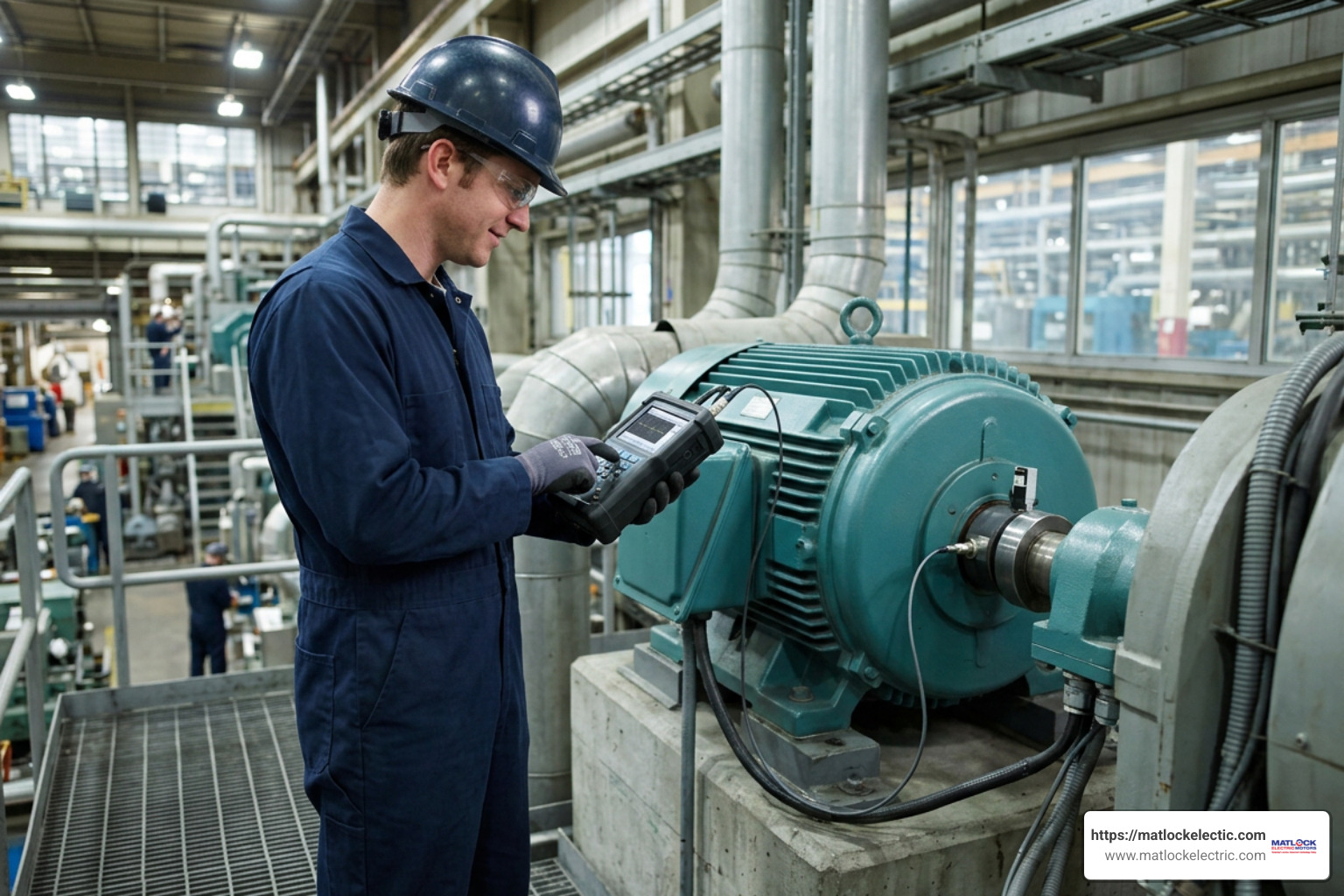
Modern diagnostic procedures allow technicians to pinpoint internal electrical and mechanical flaws before executing repairs, saving valuable time and preventing premature failures.
Advanced Testing Procedures and Predictive Maintenance
A comprehensive evaluation involves advanced electrical and mechanical diagnostic tools. Testing procedures performed before and after repairs include:
- Surge and Hipot Testing: Identifies weak turn-to-turn insulation and ground faults within winding coils.
- Infrared Thermography: Detects electrical hotspots and loose internal connections during operation.
- Vibration Analysis: Isolates imbalance, shaft misalignment, gear mesh issues, and early bearing deterioration.
Leveraging advanced technology in diagnostics along with predictive maintenance programs like ACMS allows plants to spot failures before they cause unexpected shutdowns.
On-Site Field Services and Delivery Logistics
When equipment is too large or integrated to transport easily, on-site field services bring diagnostic tools directly to your shop floor. Skilled technicians provide field troubleshooting, laser alignment, dynamic fan balancing, and dry-ice blasting to remove contamination without removing hardware.
To simplify the repair process, dedicated service centers maintain pickup fleets. Having a direct transport service pick up heavy equipment and return it after testing minimizes logistics hurdles for plant maintenance teams. Rapid field dispatch combined with dedicated pickup fleets keeps regional operations moving smoothly.
Repair vs. Replace: Making the Right Financial Decision
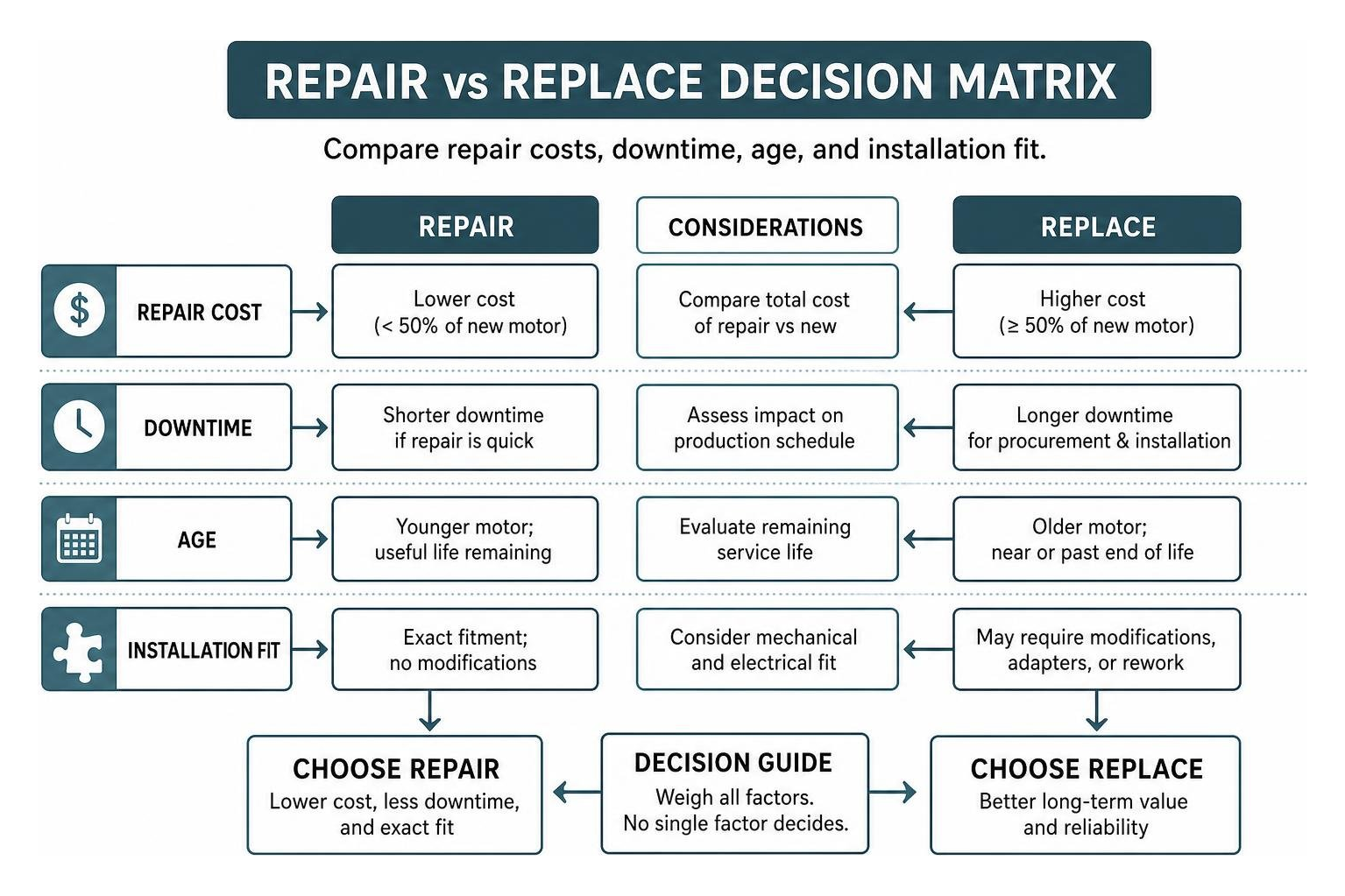
When faced with motor failure, managers must evaluate whether to repair or buy new. A common rule of thumb is that if repair costs exceed 50% of a new motor’s price, replacement should be considered. However, simple purchase price comparisons do not tell the complete story.
For specialized, legacy, or large industrial units, repairing offers clear advantages:
- Exact Fitment: Rewinding an existing motor guarantees that shaft diameter, bolt hole spacing, center height, and coupling alignments remain identical. Buying a new motor often requires modifying mounting plates or sourcing hard-to-find adapter kits.
- Reduced Turnaround Time: Custom OEM replacement motors may have multi-week lead times. A local shop standard rebuild usually takes only 3 to 4 days, with 24/7 rush service options available for emergencies.
- Component Upgrades: Rewinding with modern inverter-duty wire and premium insulation often yields a motor that is more resilient than the original OEM factory unit.
For smaller, commodity fractional-horsepower units, replacement is often the most sensible choice. However, for industrial hardware, reviewing your options alongside custom electric motors sales inventory ensures you choose the most reliable and cost-effective route.
Choosing the Best Electric Motor Service Provider
Selecting an experienced repair facility protects your equipment investment and prevents recurring failures. Key criteria to evaluate include:
- EASA Accreditation: Ensures the facility adheres to strict engineering guidelines for motor reconditioning.
- Extensive Experience: Decades of operation demonstrate proven technical capability across diverse motor designs.
- Clear Warranty Guarantees: Look for providers offering 1-year to 2-year warranties on completed repairs.
- In-House Testing Capabilities: Facilities with test panels capable of high voltage load testing (up to 4,160 VAC) ensure equipment is thoroughly vetted before reinstallation.
Working with accredited local shops that maintain deep diagnostic capabilities and extensive spare parts inventories ensures your equipment receives the highest standard of care.
For verified quality and reliable service recommendations, consult an established electric motor repair representative.
Frequently Asked Questions About Local Motor Services
How long does a standard electric motor rebuild take?
A standard electric motor rebuild typically takes 3 to 4 business days. This timeline includes teardown, cleaning, diagnostic testing, machining, dip-and-bake insulation treatment, reassembly, and final run-testing. When unexpected production stops occur, most facilities offer 24/7 emergency rush services to complete critical repairs within 24 to 48 hours.
What testing procedures ensure repair quality before installation?
Reputable repair centers perform a battery of strict tests, including offline surge testing, Megohm insulation resistance tests, and high-potential (Hipot) safety checks. After assembly, motors are run-tested under voltage for a minimum of one hour to monitor bearing vibration, operational temperature, and rotational balance. Many centers provide full service reports detailing these results along with the returned motor.
Why is rewinding often preferred over purchasing a new motor?
Rewinding preserves the original physical dimensions of the motor housing, avoiding expensive retrofits to mounting bases, belt pulleys, or direct drive couplings on the shop floor. Additionally, custom rewinding allows technicians to upgrade internal insulation materials, delivering a remanufactured motor that often handles heat surges and modern VFD electrical demands better than off-the-shelf units.
Conclusion
A failed electric motor doesn’t have to mean costly operational delays. Partnering with a trusted electric motor repair local specialist gives you access to advanced diagnostic troubleshooting, expert motor rewinding, custom machining, and emergency field services designed to minimize downtime. Combining high-quality in-shop service with a proactive maintenance strategy ensures your critical equipment operates smoothly for years to come.
To restore your critical machinery or schedule preventative field diagnostics, explore our comprehensive repairs services today and keep your business moving forward.