
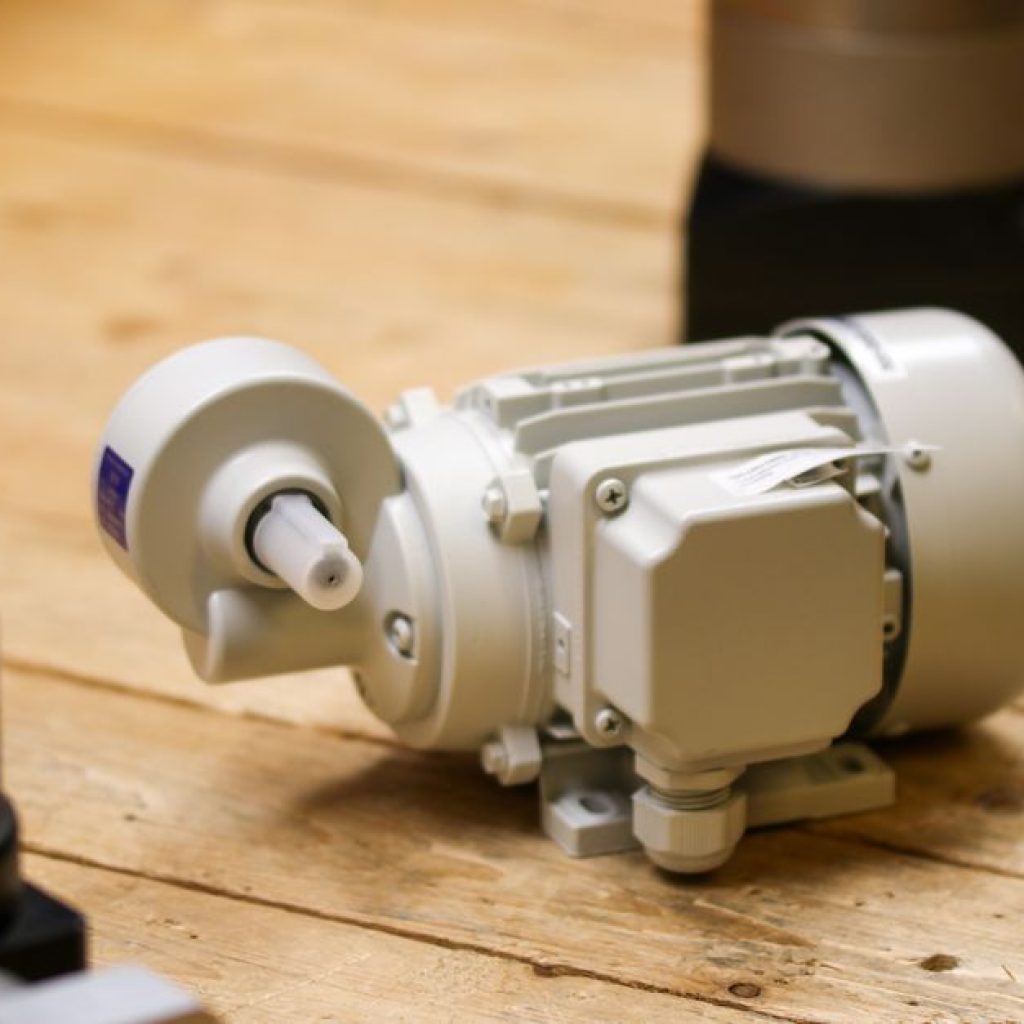
Electric Motor Enclosure Types at a Glance
Electric motor enclosure types describe how a motor is protected from dirt, water, weather, corrosive materials, and hazardous gases – while still removing heat.
The quick answer: motor enclosures fall into two broad groups:
| Enclosure category | Common types | How it cools | Best fit |
|---|---|---|---|
| Open | ODP, WPI, WPII | Outside air moves through the motor | Clean indoor areas or protected outdoor settings |
| Totally enclosed | TEFC, TENV, TEAO, TEFV, TEAAC, TEWAC | Heat moves through the frame, fan, airflow, or heat exchanger | Dusty, wet, harsh, or controlled environments |
| Hazardous-location | XP / explosion-proof | Varies by design, with containment for internal ignition | Areas with flammable gas, dust, or fibers |
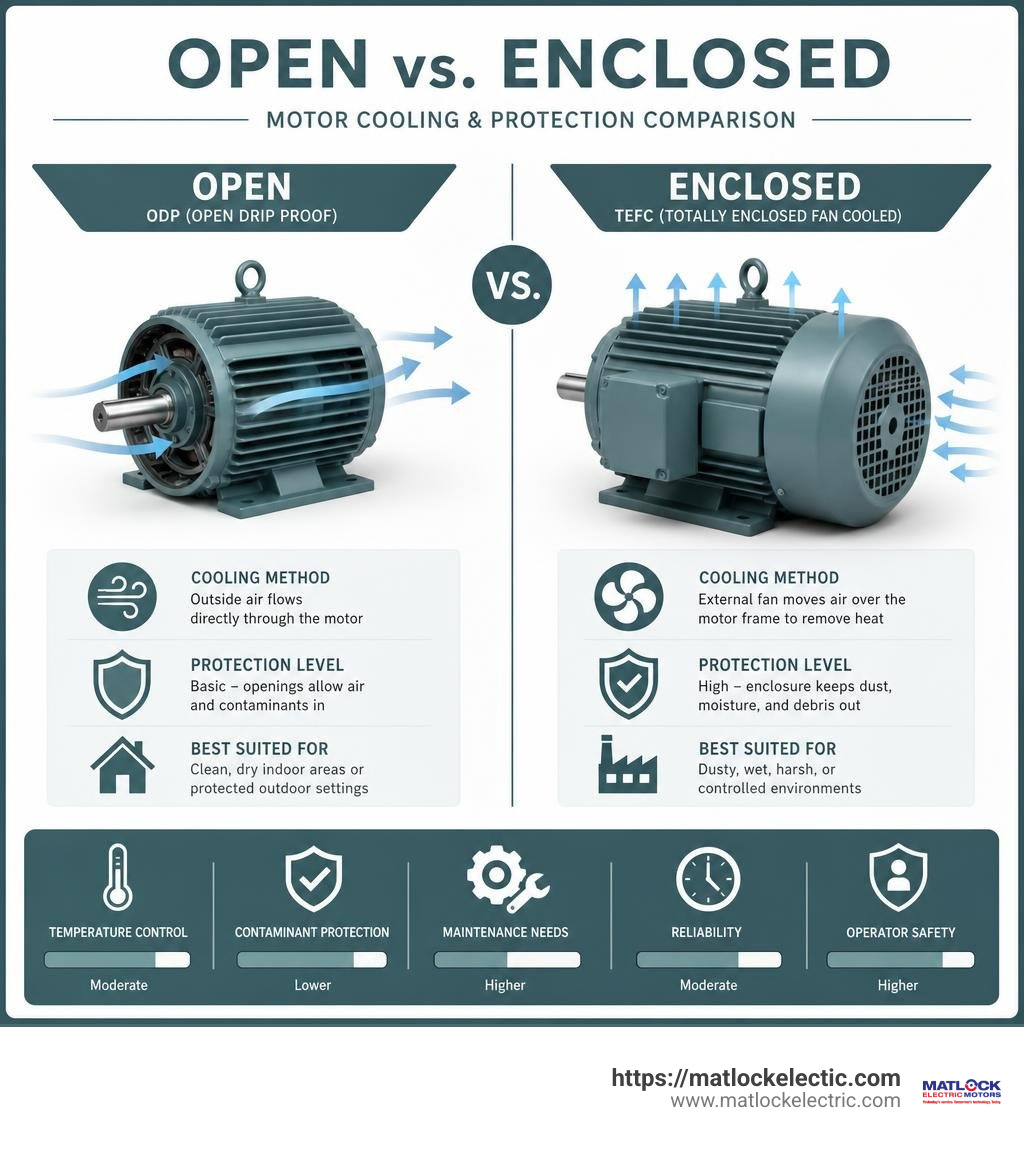
For many everyday industrial applications, the key comparison is ODP vs. TEFC. An Open Drip Proof motor uses direct internal airflow and suits clean, dry spaces. A Totally Enclosed Fan Cooled motor keeps outside air away from internal parts and uses an external fan to move air across its frame.
That difference affects motor temperature, reliability, maintenance needs, and whether a motor can safely operate in its location. Choosing by horsepower or voltage alone is not enough.
What Is a Motor Enclosure and Why Does It Matter?
When we talk about an electric motor enclosure, we are talking about far more than a decorative metal shell. A motor enclosure is a carefully engineered housing designed to fulfill three essential duties simultaneously: shield internal components from atmospheric contaminants, regulate internal thermal dissipation, and safeguard operating personnel from mechanical and electrical hazards.
Inside every running motor, electrical energy transforms into mechanical force, creating heat as an inevitable byproduct. If that thermal energy remains trapped around the copper stator windings and rotor assembly, insulation materials degrade rapidly, leading to electrical short circuits and catastrophic motor failure. However, opening up the motor frame to let air pass through freely leaves delicate internal electrical components exposed to moisture, conductive metal dust, abrasive grit, and chemical vapors.
That is where selecting the correct motor enclosure becomes a critical engineering decision. When we source electric motors for any plant floor or outdoor facility, matching the enclosure design to the environmental reality is what guarantees a long, reliable operating life.
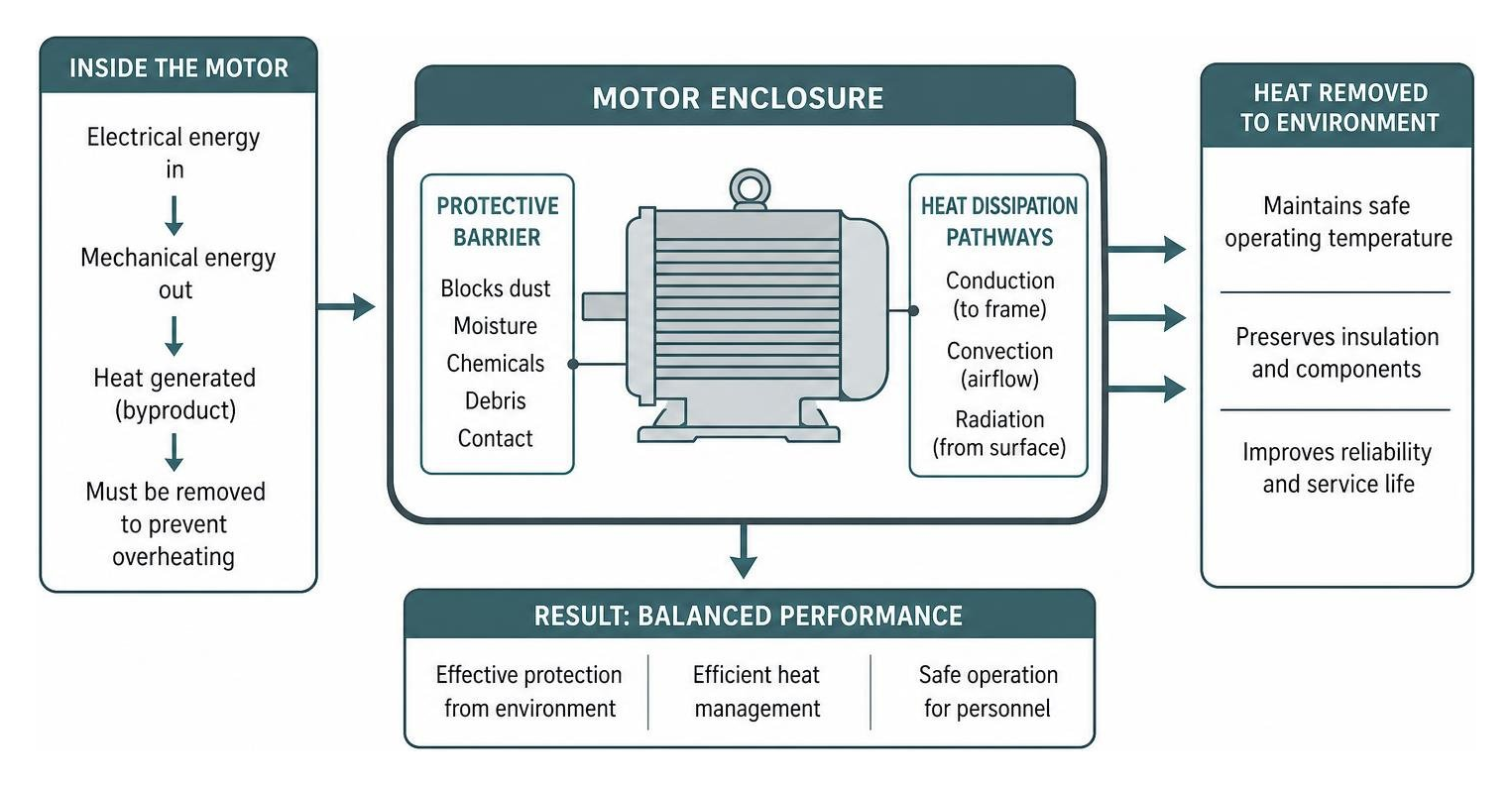
A proper enclosure balances ingress protection (blocking solid objects and liquids) with thermal management (removing waste heat). Furthermore, it provides personal safety by preventing workers from making accidental contact with rotating shafts, internal fans, or live electrical connections.
Primary Open and Sealed Electric Motor Enclosure Types
To choose the right housing for your application, we first separate motors into two fundamental structural philosophies: Open Enclosures and Totally Enclosed designs.
Open enclosures permit ambient cooling air to circulate directly over the stator windings and rotor. These designs maximize heat dissipation efficiency at a minimal manufacturing cost, but they offer limited defense against airborne contaminants. Conversely, totally enclosed designs seal off internal air pathways entirely from the surrounding room, relying on external surface cooling, auxiliary fans, or closed-loop heat exchangers.
| Feature / Characteristic | Open Drip Proof (ODP) | Totally Enclosed Fan Cooled (TEFC) |
|---|---|---|
| Internal vs. External Air Movement | Ambient air flows directly through internal windings | Internal and external air streams are strictly isolated |
| Liquid Protection Angle | Up to 15 degrees from vertical line | Complete protection against splashing, rain, and hose washdown |
| Particulate Protection | Poor (vulnerable to airborne dust, lint, and grit) | High (prevents dust, fibers, and grit from entering internal frame) |
| Cooling Mechanism | Internal rotor-mounted fan blades | External shaft fan blowing air over frame cooling fins |
| Ideal Operating Environment | Clean, dry, well-ventilated indoor facilities | Dusty, humid, wet, chemical, or outdoor installations |
| Relative Initial Cost | Lower capital cost | Moderate capital cost |
Open Drip Proof (ODP) Enclosures
The Open Drip Proof (ODP) enclosure is the workhorse of clean, controlled environments. In an ODP motor, ventilation louvers allow ambient air to enter directly into the housing, where an internal fan circulates it across the windings before forcing it back out.
To offer basic liquid defense, ODP openings feature downward-angled louvers designed so that liquid drops falling within a 15-degree angle from the vertical line cannot drop straight into internal electrical components or run down internal surfaces.
- Best Suited Environment: Clean, dry, indoor rooms with controlled humidity and virtually no circulating industrial dust or chemical fumes.
- Common Applications: Indoor commercial HVAC supply fans, cleanroom water pumps, indoor air compressors, and light commercial machine tools.
- Key Advantages: Lower initial purchase cost, excellent natural cooling efficiency, lighter overall physical weight, and minimal power consumption required for thermal management.
- Limitations: Zero defense against fine particulate dust, steam, hose-directed water spray, or corrosive chemical fumes.
When evaluating ODP units for various facility drivers, understanding the core electrical drive mechanics helps determine if direct air circulation is suitable. You can explore our breakdown on the differences of ac dc motors to see how airflow demands align with different rotor and commutator designs.
Totally Enclosed Fan Cooled (TEFC) and Other Electric Motor Enclosure Types
When ambient air turns dirty, humid, or aggressive, we step up to Totally Enclosed Fan Cooled (TEFC) motors. In a TEFC motor, no outside air enters the interior housing. The internal frame is completely sealed against free air exchange with the ambient environment, although it is not considered 100% gastight or airtight.
To dissipate heat, TEFC motors feature external frame cooling fins. A shaft-mounted fan located on the non-drive end of the motor blows external air along these cast ribs, pulling heat away from the frame via conduction and convection.
For high-demand TEFC units, cast iron frame construction is generally preferred over rolled steel frames. Cast iron offers higher thermal conductivity, superior resistance to mechanical twisting under heavy loads, and outstanding corrosion resistance in damp or chemically active plants.
TEFC enclosures protect effectively against severe weather, high ambient dust loads, dirty manufacturing atmospheres, and moderate fluid splashing or low-pressure washdown procedures.
Non-Ventilated and Forced-Air Electric Motor Enclosure Types
Not all totally enclosed environments allow for a traditional shaft-driven external fan cooling fin setup. Depending on speed, space, or atmospheric cleanliness, we utilize specialized variants:
- Totally Enclosed Non-Ventilated (TENV): TENV motors lack an external cooling fan altogether. Instead, they dissipate internal heat entirely through natural conduction and radiation through their frame surfaces. Because air convection without a fan is thermally limited, TENV designs are usually restricted to smaller motors rated at 10 HP or below. They excel in highly contaminated, lint-filled, or cleanroom environments where spinning cooling fans would stir up settled particles or clog.
- Totally Enclosed Air Over (TEAO): TEAO motors feature neither internal nor external fans. Instead, they rely completely on an external airflow provided by the host equipment they drive. A classic example is a TEAO motor mounted directly inside an HVAC plenum duct powering an axial fan—the air stream generated by the driven blower passes directly over the motor body to cool it.
- Totally Enclosed Forced Ventilated (TEFV) / Blower Cooled (TEBC): Standard TEFC cooling fans rely directly on motor shaft rotation. When a motor is powered through a Variable Frequency Drive (VFD) running at extremely slow speeds and high torque, the main shaft fan slows down and cannot supply enough cooling air. TEBC/TEFV enclosures resolve this issue by mounting a secondary, independently powered blower fan on the rear frame cover. This secondary blower runs at constant full speed, ensuring continuous, maximum cooling air delivery regardless of how fast or slow the primary motor shaft turns.
When configuring continuous-duty machinery or variable-speed production equipment, picking the appropriate forced-air configuration is critical. If you are upgrading existing drive systems, explore our full range of options for electric motor sales to match your speed profiles.
Large Motor Enclosures: WPI, WPII, TEAAC, and TEWAC
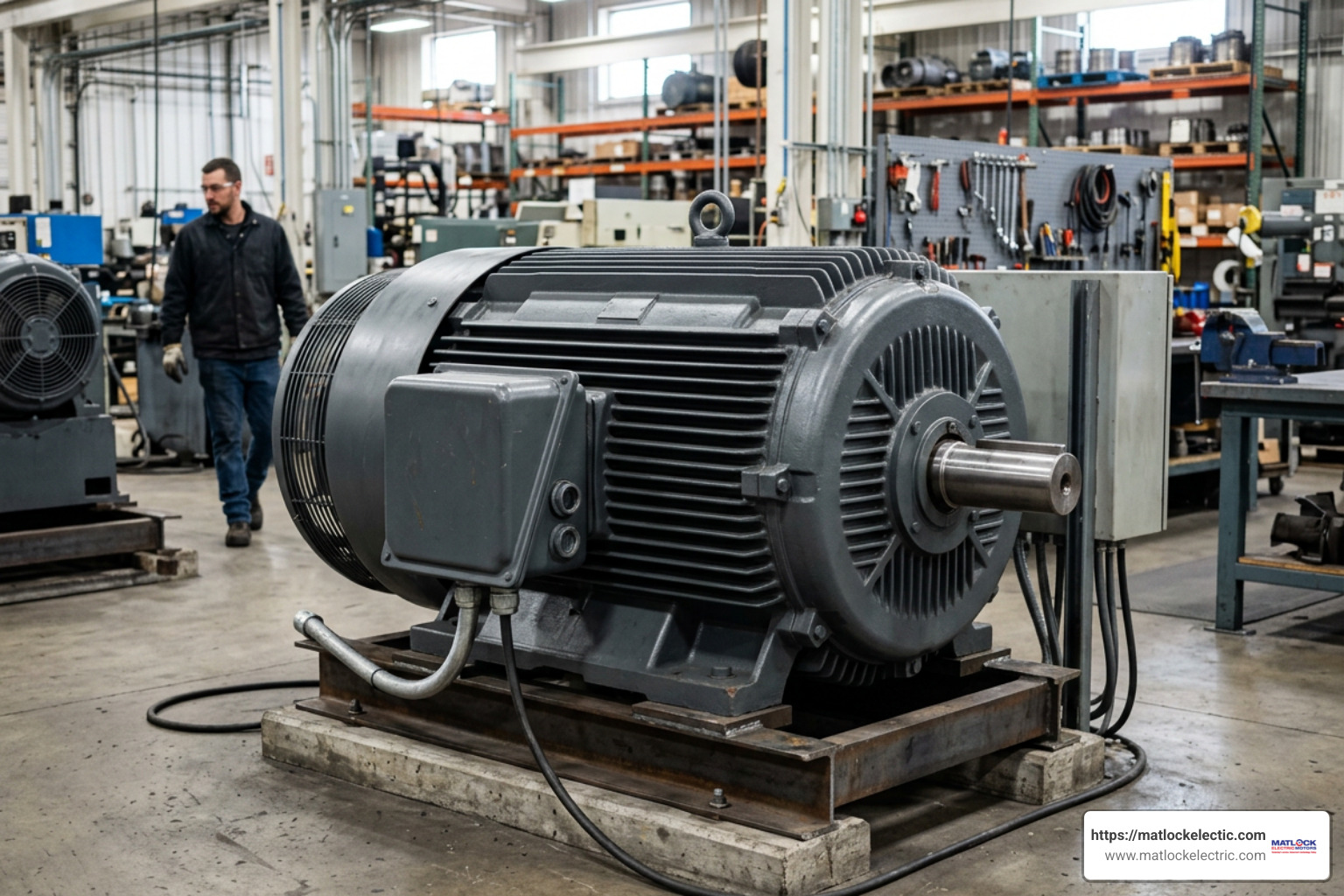
When motor ratings scale up into medium-voltage territory—reaching 3,000 horsepower (HP) up to tens of megawatts—heat management and frame engineering undergo a fundamental shift. Large industrial machinery powering municipal water pumps, paper mill refiners, steel mill rolling drives, and power generation turbines generates immense thermal loads that small frame fins cannot dissipate.
Selecting enclosures for these large frames directly influences total motor size, system footprint, site civil engineering requirements, and overall capital cost. A detailed comparison of these large-capacity housing systems can be reviewed in 4 Types of Enclosures for Large Motors | Pumps & Systems.
Weather Protected Type I (WPI) vs. Type II (WPII)
For high-horsepower outdoor installations where budget or environmental factors favour open-ventilation cooling, Weather Protected enclosures provide structural defenses far beyond standard indoor ODP frames:
- Weather Protected Type I (WPI): Features protected intake and exhaust vents angled to block direct falling rain and large airborne debris from entering the internal air path.
- Weather Protected Type II (WPII): Represents a major advancement in passive fluid and particle separation. WPII intake air passages incorporate specialized top-hat baffles that force incoming outdoor cooling air to make at least three abrupt changes in direction of at least 90 degrees before reaching active motor components.
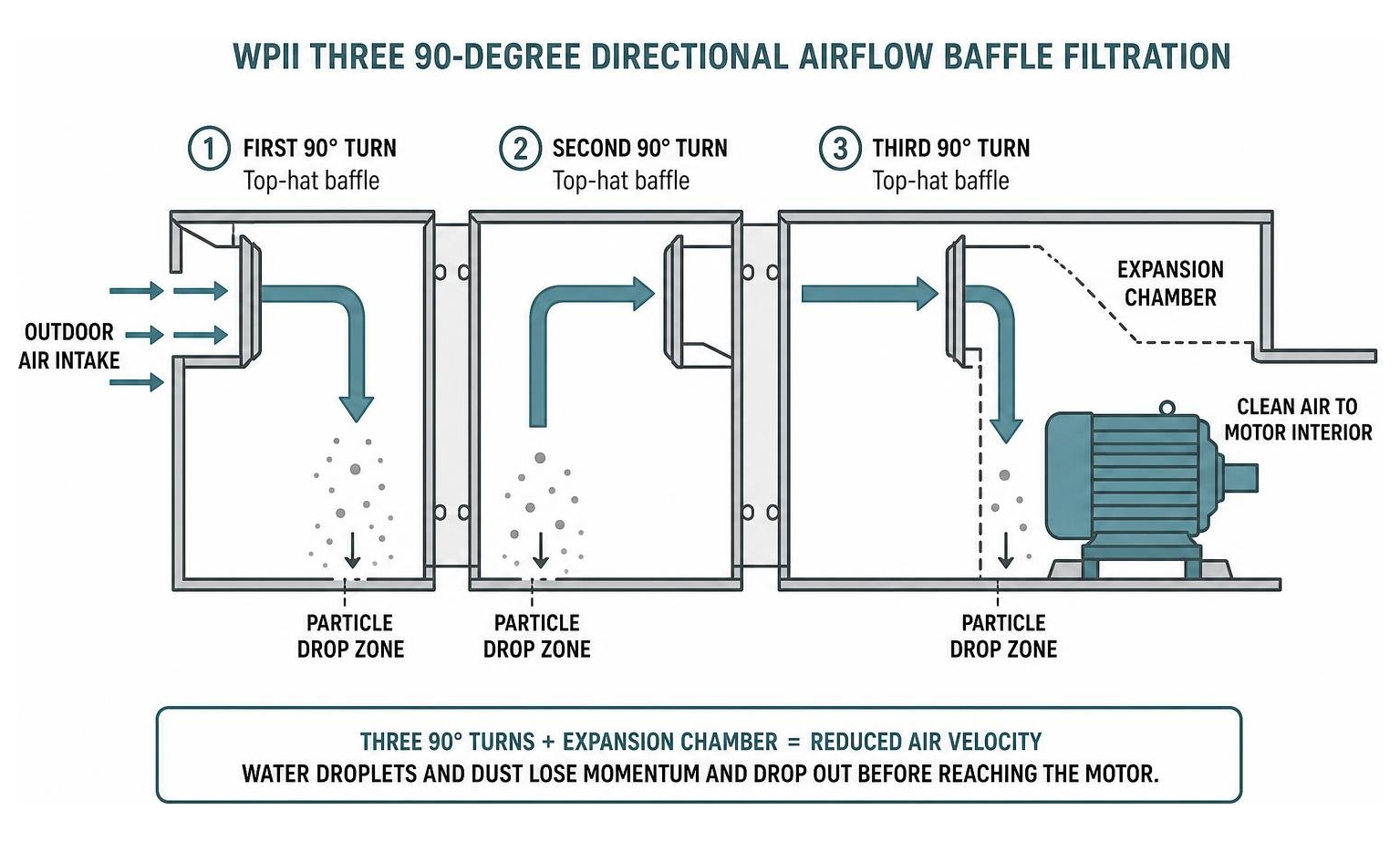
By forcing incoming air through three sharp 90-degree turns while simultaneously reducing airflow velocity in an internal expansion chamber, heavy water droplets and dust particles lose momentum and drop harmlessly out of the air stream. WPII enclosures are engineered to withstand severe outdoor storms with winds up to 100 mph driving rain straight at the housing. To further maintain reliability, WPII intakes typically utilize washable stainless steel air filters rated to capture 90% of particles 10 microns or larger.
TEAAC vs. TEWAC Heat Exchangers
When large industrial motors (3,000 HP and above) operate in highly corrosive, dusty, or hazardous environments where outside air cannot touch internal windings, we must deploy closed-loop heat exchanger enclosures:
- Totally Enclosed Air-to-Air Cooled (TEAAC): A TEAAC enclosure features a closed internal air loop that circulates hot air from inside the motor through a bank of heat exchanger tubes mounted in a top-mounted housing. External fans blow ambient air through the interior of these tubes to cool the internal closed-loop air.
- Trade-Offs: TEAAC systems require no site cooling water, making them ideal for remote dry pipelines. However, air-to-air thermal transfer is relatively inefficient. As a result, specifying a TEAAC enclosure typically forces the motor frame size up by one or two frame sizes compared to a TEWAC or WPII unit of equal power output. Furthermore, running TEAAC motors at low speeds on VFDs risks severe overheating unless auxiliary external blowers are added.
- Totally Enclosed Water-to-Air Cooled (TEWAC): TEWAC enclosures offer the ultimate cooling efficiency for high-capacity machinery. Internal motor air circulates through a closed loop passing over a water-fed heat exchanger bundle (similar to a heavy-duty radiator core). Cold plant water flows through the tube interior, absorbing heat from the internal air loop without allowing water to directly touch internal electrical parts.
- Trade-Offs: TEWAC setups provide exceptionally high cooling efficiency, quiet acoustic operation, and compact frame dimensions. TEWAC enclosures are available for massive installations, accommodating induction motors up to 30 megawatts (MW) and synchronous motors up to 100 MW. The primary operational prerequisite is access to a clean, reliable, continuous site cooling water supply equipped with water leak detection sensors.
Explosion-Proof (XP) Enclosures and NEMA Protection Ratings
In facilities where volatile gases, flammable liquids, or combustible dusts contaminate the atmosphere, standard motor enclosures pose a severe ignition threat. An electrical arc from a centrifugal switch, thermal overload, winding insulation breakdown, or simple static discharge could trigger a catastrophic plant explosion.
Explosion-Proof (XP) enclosures—sometimes designated as Totally Enclosed Explosion Proof (TEXP)—are specifically engineered to mitigate this risk. A common misconception is that XP enclosures are gas-tight boxes that prevent volatile vapors from getting inside. In reality, gases can migrate into an XP frame over time.
Instead, an Explosion-Proof enclosure is engineered to contain an internal explosion without rupturing. If flammable gas inside the frame ignites, the heavy cast iron or steel housing withstands the internal pressure wave while forcing escaping hot combustion gases through precisely machined flame paths (flange joints and shaft clearances). As these hot gases pass through the narrow flame path, they cool down below the ignition temperature of the surrounding atmosphere before exiting the motor.
Hazardous location enclosures are categorized by standards detailed in the official NEMA Enclosure Types specification:
- Class I: Flammable gases, vapors, or liquids (e.g., petroleum refineries, chemical processing plants, gasoline dispensaries).
- Class II: Combustible or conductive dusts (e.g., grain elevators, flour mills, coal processing plants, metal powder facilities).
- Class III: Easily ignitable fibers or flyings (e.g., textile mills, wood processing plants).
Furthermore, hazardous areas are split into two operational Divisions:
- Division 1: Flammable concentrations of hazardous materials are present continuously, frequently, or periodically during normal everyday operations.
- Division 2: Flammable hazards are normally handled in closed containers or systems and only escape into the atmosphere under abnormal failure conditions, structural leaks, or equipment breakdowns.
Comparing Motor Enclosures to NEMA 250 Ratings
While motor frame designs use designations like ODP, TEFC, or WPII, industrial system designers frequently reference NEMA 250 standards used for control panels, electrical boxes, and variable frequency drive (VFD) housings.
When integrating motor systems with remote drives and control panels, matching these two specification systems ensures comprehensive system protection. Over 95% of industrial VFD installations utilize Type 1, Type 12, or Type 3R enclosures, as documented in the ABB Low Voltage Drives Variable Frequency Drive Enclosure Selection Quick Guide.
Here is how common NEMA 250 panel ratings map conceptually to motor enclosure protection profiles:
| NEMA 250 Rating | Primary Environment Defense | Equivalent Motor Enclosure Protection |
|---|---|---|
| Type 1 | General indoor protection against falling dirt | Open Drip Proof (ODP) |
| Type 3R | Outdoor protection against rain, sleet, ice, and falling debris | Weather Protected (WPI / WPII) |
| Type 4 / 4X | Watertight protection against hose washdown and salt corrosion | Washdown / Sealed TEFC |
| Type 12 | Indoor protection against circulating dust, lint, and dripping coolants | Totally Enclosed Fan Cooled (TEFC) |
| Type 7 / 9 | Containment of internal explosions in hazardous Class I / Class II areas | Explosion Proof (XP / TEXP) |
Selection and Maintenance Best Practices for Motor Lifespan
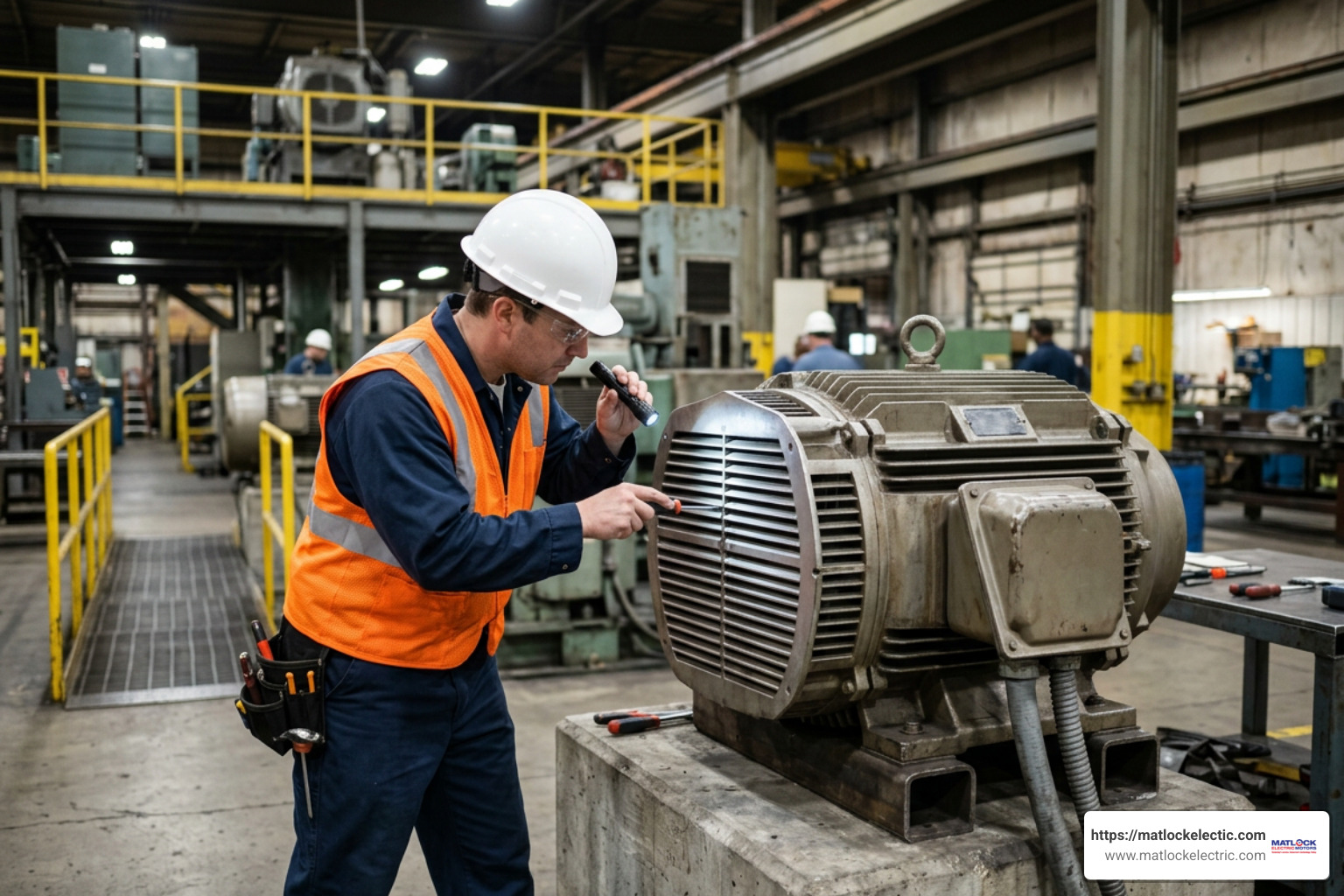
Selecting the ideal motor housing is only half the battle—maintaining proper airflow and seal integrity throughout the equipment lifecycle is what prevents unscheduled downtime.
When we service and inspect industrial installations, we emphasize these core preventive maintenance practices across different enclosure styles:
- Air Intake Filter Cleaning for Open/Weather-Protected Units: WPI and WPII enclosures depend heavily on clean intake filters. Stainless steel washable filters should be inspected on a fixed schedule. Remove filters, wash them down thoroughly with high-pressure water or mild cleaning solvents, allow them to dry completely, and reinstall them.
- Differential Pressure Monitoring: On critical large-frame motors (WPII, TEAAC, TEWAC), install differential pressure sensors across intake filters or air duct heat exchangers. A rising pressure differential indicates debris accumulation, warning technicians to clean filters before thermal overload triggers a system trip.
- Frame Fin Degreasing on TEFC Motors: TEFC cooling relies on thermal conduction through frame fins. If grease, oil, paper pulp, or industrial grime accumulates between cast fins, the motor becomes insulated, leading to elevated winding temperatures. Clean external frame fins regularly using pressurized air or suitable washdown degreasers.
- Heat Exchanger Inspection & Leak Detection for TEWAC Units: For water-to-air cooled systems, regularly inspect heat exchanger tubes for mineral scaling or bio-fouling, which reduces thermal transfer efficiency. Maintain active inline water leakage detectors to immediately catch any internal pipe pinhole leaks before moisture can reach stator windings.
- Seal and Gasket Integrity Maintenance: On washdown, TEFC, and explosion-proof motors, inspect neoprene shaft seals, terminal box gaskets, and machined flame-path surfaces during every scheduled overhaul. Replace brittle gaskets immediately to preserve ingress barriers.
If your facility is experiencing recurring motor overheating, insulation failure, or housing degradation, our team provides complete diagnostic and overhaul capabilities. Learn more about our comprehensive ac repairs and on-site field services to keep your critical drives operating smoothly.
Frequently Asked Questions About Motor Enclosures
What is the main difference between ODP and TEFC motor enclosures?
The fundamental difference lies in how cooling air interacts with internal components. An Open Drip Proof (ODP) enclosure features open ventilation louvers that draw outside air directly through internal stator windings and rotor paths. A Totally Enclosed Fan Cooled (TEFC) enclosure isolates internal components entirely from outside air exchange, utilizing an external shaft fan to blow ambient air across external frame fins to remove heat via conduction and surface convection.
Why are TENV enclosures limited to smaller horsepower motors?
Totally Enclosed Non-Ventilated (TENV) enclosures feature no internal or external cooling fans. They dissipate internal heat strictly by natural heat radiation and convection through the frame surface area. Because a motor’s internal heat generation scales up faster than its physical exterior surface area as horsepower increases, TENV designs are thermally limited to smaller motors (typically 10 HP or lower) to prevent winding insulation breakdown.
How do WPII enclosures block wind-driven rain and airborne dust?
Weather Protected Type II (WPII) enclosures utilize top-hat baffle assemblies built into intake air passages. These baffles force incoming outdoor cooling air to make at least three abrupt 90-degree changes in direction before reaching the motor interior. When air makes these sharp turns inside an expansion chamber, airflow velocity drops rapidly, causing heavy water droplets, rain, and airborne dust particles to lose momentum and drop out of the air stream before reaching active motor components.
Conclusion
At the end of the day, an electric motor enclosure is far more than a simple protective cover—it is a core engineering system that dictates your motor’s cooling capacity, maintenance schedule, operational safety, and overall lifespan. Choosing an Open Drip Proof motor for a clean HVAC room keeps initial capital expenses low, while deploying a Totally Enclosed Fan Cooled unit in dusty or wet manufacturing bays prevents costly winding failures down the road.
When applications scale up into high-horsepower machinery or cross into hazardous gas and dust environments, understanding the structural trade-offs of WPII, TEAAC, TEWAC, and Explosion-Proof frames ensures your production line runs smoothly and safely.
If you are evaluating replacement motors, troubleshooting recurring thermal issues, or upgrading facility drive systems, our experienced engineering team is here to help you make the right choice. Explore our complete guide on the differences of ac dc motors or contact our team at Matlock Electric today to optimize your plant’s motor fleet for maximum reliability!