Fundamental Energy Conversion: AC Motor vs DC Motor Operation
At their core, electric motors convert electrical energy into mechanical energy through rotational magnetic forces. The core physical distinction between an ac motor vs dc motor lies in how each topology establishes its magnetic fields to drive the rotor.
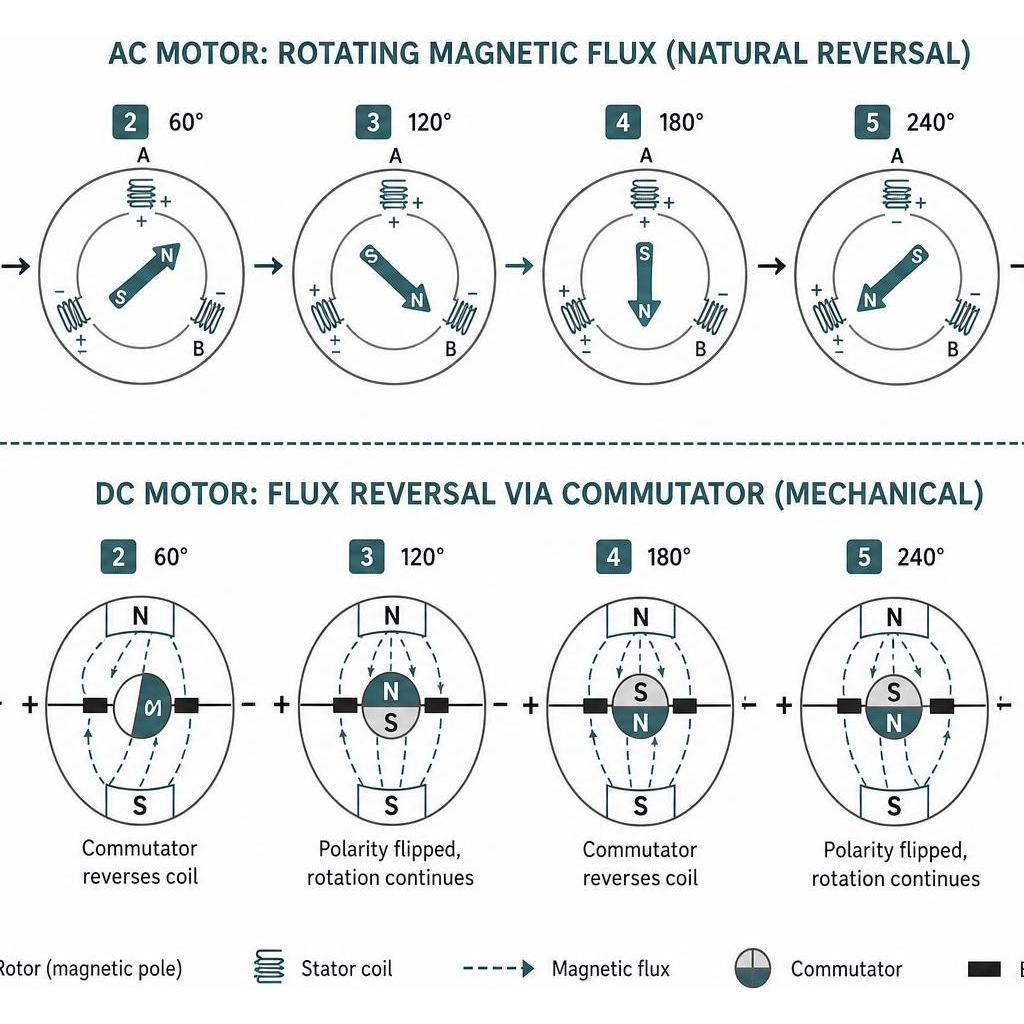
In a DC motor, direct current flows continuously in one direction. To maintain rotation, the internal magnetic fields must constantly flip polarity so the rotor continuously chases the stator’s magnetic pole. In traditional designs, this polarity reversal happens mechanically via a commutator and carbon brushes.
Conversely, an AC motor relies on alternating current, which naturally reverses direction—60 times per second (60 Hz) in standard North American power grids. This alternating flow naturally generates a dynamic, rotating magnetic field within the stator coils, eliminating the need for mechanical contact points to flip electrical polarity.
| Specification / Operational Metric | AC Induction Motor | Brushed DC Motor | Brushless DC (BLDC) Motor |
|---|---|---|---|
| Input Power Source | Single or Three-Phase AC | Constant Direct Current (DC) | DC (converted electronically) |
| Internal Commutation | Electromagnetic Induction | Mechanical (Brushes & Commutator) | Electronic (Inverter & Sensors) |
| Typical Energy Efficiency | 80%–95% (up to 95%+ for >100 kW) | 70%–85% | 85%–90%+ |
| Speed Regulation Range | 1:100 to 1:300 (with VFD) | Up to 1:1000 | 1:1000+ |
| Starting Current Multiplier | 5 to 7 times rated current | 2 to 3 times rated current | Controlled electronically |
| Maintenance Cycle | Very Low (20+ year lifespan) | High (Brush replacement every 1k–3k hours) | Low (Bearing maintenance only) |
Rotating Magnetic Fields in AC Induction Motors
Inside an AC induction motor, three-phase stator windings are spatially arranged around the inner periphery of the motor housing. When three-phase alternating currents pass through these windings, they produce a smooth, rotating magnetic field (RMF) that spins at a speed determined by the line frequency and the number of magnetic poles. This is called the synchronous speed.
As this magnetic flux cuts through the conductors of the stationary rotor (often shaped like a squirrel cage), it induces an electrical current within the rotor bars according to Faraday’s law of induction. This induced current creates its own secondary magnetic field, which interacts with the stator’s RMF to produce torque.
Because the rotor must continuously “chase” the stator’s magnetic field to sustain electromagnetic induction, it operates at a slightly lower rotational speed than the field itself. This speed difference is known as rotor slip.
Commutators and Armatures in DC Motors
Traditional DC motors utilize stationary magnets or field coils on the motor shell (stator) and place the energized electrical conductors directly on the rotating central shaft (armature).
To ensure continuous shaft rotation, current supplied to the armature coils must switch direction every half-revolution. Mechanical commutation achieves this through split copper ring segments called a commutator, mounted directly on the armature shaft.
Stationary carbon brushes press firmly against the spinning commutator bars to complete the electrical circuit from the battery or DC power supply.
While this setup provides simple speed control by altering applied voltage, it creates significant friction losses, localized electrical arcing, carbon dust accumulation, and thermal buildup, which severely limits maximum RPM and operational efficiency.
Performance Metrics: Efficiency, Torque, and Speed Regulation
When evaluating motor systems for electric vehicles or demanding industrial equipment, performance is judged across power density, torque delivery, speed stability, and energy conservation.
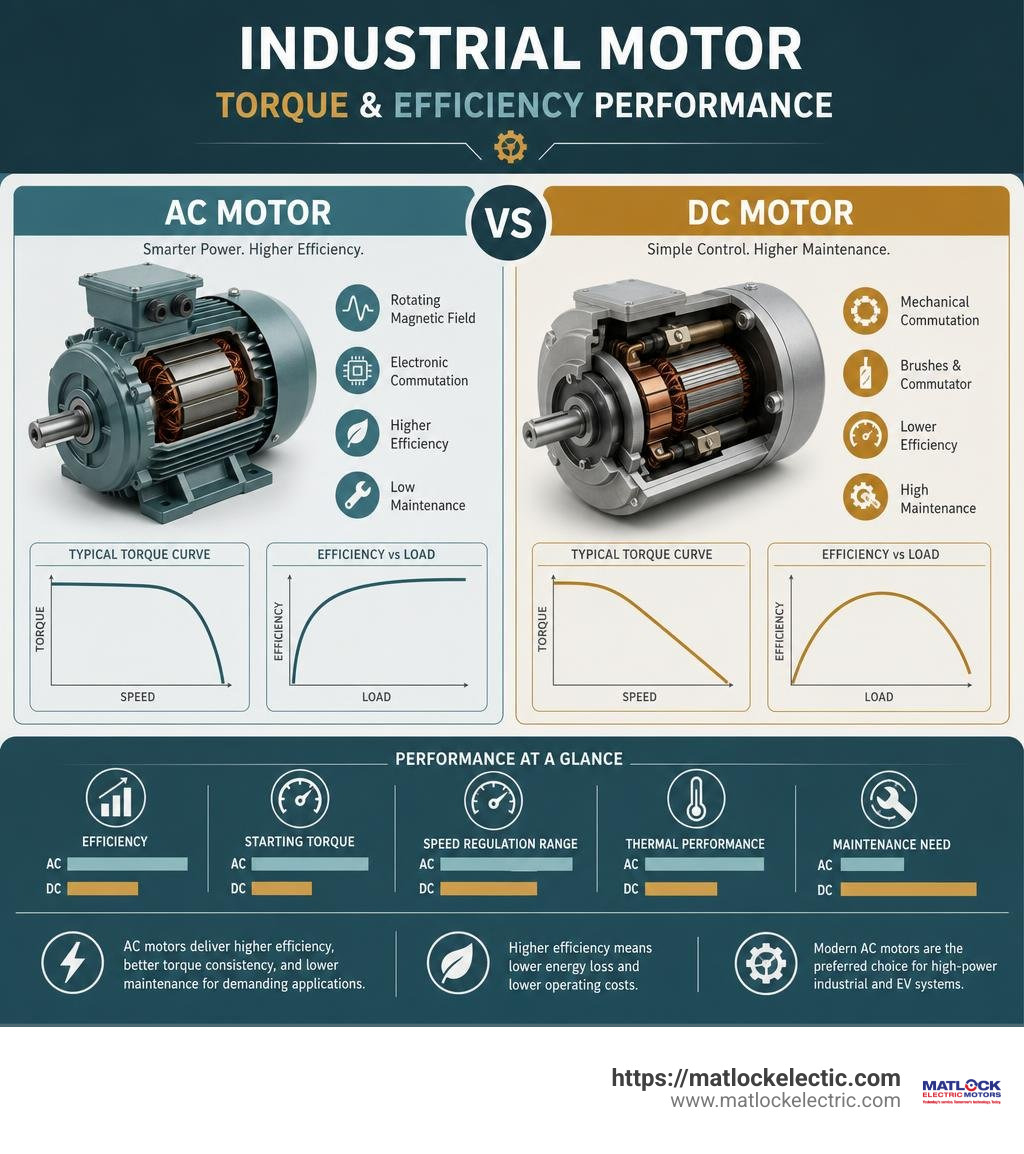
While DC motors have historically dominated applications requiring high starting torque at low speeds, modern power electronics paired with advanced AC motors have redefined speed and torque management capabilities.
AC Motor vs DC Motor Efficiency in High-Power EV Systems
For high-power industrial and automotive applications exceeding 100 kW, AC induction motors and Permanent Magnet Synchronous Motors (PMSMs) regularly achieve energy efficiency levels exceeding 95%. In electric vehicles, high power density is paramount; compact permanent magnet AC motors maximize mechanical output while minimizing physical curb weight.
Considering that energy consumption accounts for over 90% of an industrial motor’s Total Cost of Ownership (TCO), even minor efficiency improvements yield massive cost savings over time.
Operating efficient Electric Motors coupled with properly managed thermal dissipation loops allows modern EV powertrains to handle peak acceleration loads repeatedly without thermal degradation.
AC Motor vs DC Motor Speed Control and Torque Dynamics
Speed control in a DC motor is straight forward: adjusting the input DC voltage yields a proportional change in shaft speed, providing wide speed regulation ranges up to 1:1000. Additionally, DC motors deliver maximum torque instantaneously at zero RPM (150%–200% of rated torque), making them exceptional for static load initiation.
Historically, AC motors ran only at fixed speeds governed by grid line frequency (e.g., 1800 RPM or 3600 RPM at 60 Hz). However, the advent of solid-state Variable Frequency Drives (VFDs) revolutionized AC performance.
VFDs adjust both output frequency and voltage dynamically, enabling AC motors to reach dynamic acceleration profiles, deliver precise torque across fluctuating loads, and minimize initial starting inrush currents (which traditionally spike to 5–7 times rated operating current).
Lifespan, Maintenance, and the Role of Brushless DC Motors
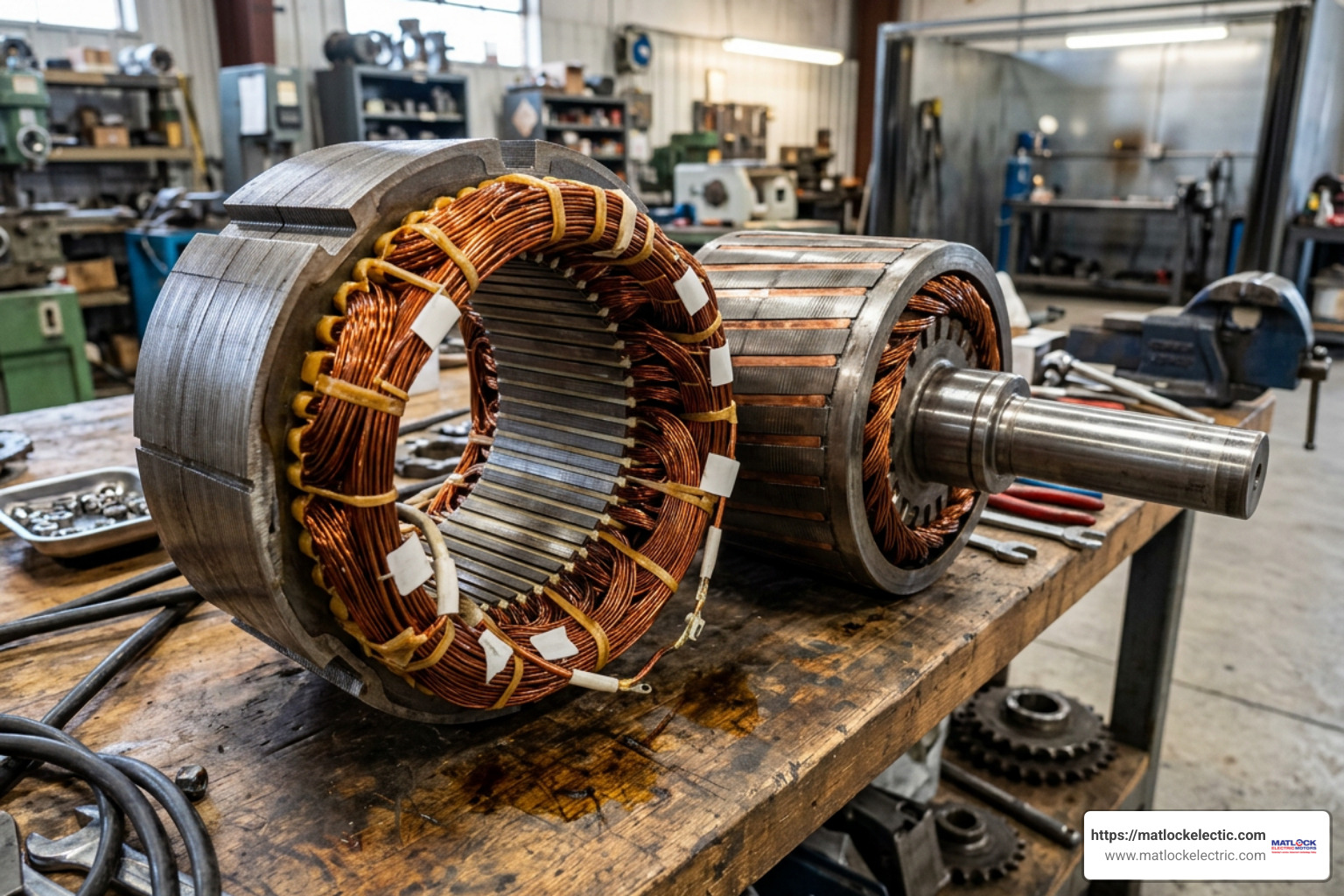
Operational longevity directly influences powertrain selection. Heavy industrial plants and high-mileage EV fleets cannot tolerate frequent maintenance shutdowns or unexpected mechanical failures caused by internal component wear.
Comparing Brushed DC, BLDC, and AC Motor Reliability
Traditional brushed DC motors carry an operational lifespan capped by carbon brush wear. Physical rubbing between carbon brushes and the copper commutator requires brush replacements every 1,000 to 3,000 operating hours. This mechanical friction generates heat, noise (60–70 dB), and fine carbon dust that can contaminate internal windings.
Brushless DC (BLDC) motors—often classified alongside Electronically Commutated (EC) motors—eliminate mechanical contact by turning the internal layout inside out. Permanent magnets are mounted on the spinning rotor, while the windings remain stationary on the stator.
Solid-state electronics invert DC power into polyphase AC signals guided by Hall-effect sensors, pushing operational efficiency to 85%–90%+ while eliminating brush maintenance entirely.
Similarly, AC induction motors feature zero physical electrical contact points inside the motor housing. With no brushes to wear down, AC motors routinely achieve an operational lifespan exceeding 20 years, with Mean Time Between Failures (MTBF) reaching up to 100,000 hours.
Diagnostic and Repair Considerations for Heavy-Duty Powertrains
Even high-durability AC powertrains undergo mechanical stress over millions of rotation cycles. Comprehensive plant maintenance relies on structured diagnostic protocols to catch minor irregularities before catastrophic failure occurs.
Preventive strategies for industrial motor systems include:
- Vibration Testing: Detecting early bearing degradation, dynamic imbalance, or shaft misalignment by isolating frequency peaks (such as stator slot passing frequencies).
- Insulation Resistance Analysis: Measuring dielectric integrity between phase windings and ground frames to prevent internal short circuits caused by moisture or transient voltage spikes.
- Thermal Imaging: Scanning junction boxes, cooling vents, and drive connections to detect high-resistance electrical hot spots under load.
When heavy-duty industrial machinery experiences winding breakdown or severe surge damage, specialized AC Repairs restore equipment back to original factory tolerances without requiring full unit replacement.
Why EV Manufacturers and Heavy Industry Prefer AC Powertrains

Modern high-performance electric vehicles use AC-based traction powertrains supplied by onboard battery arrays rectifying through power inverters.
The decision to pair high-density battery storage with AC traction motors stems from fundamental physical and structural advantages:
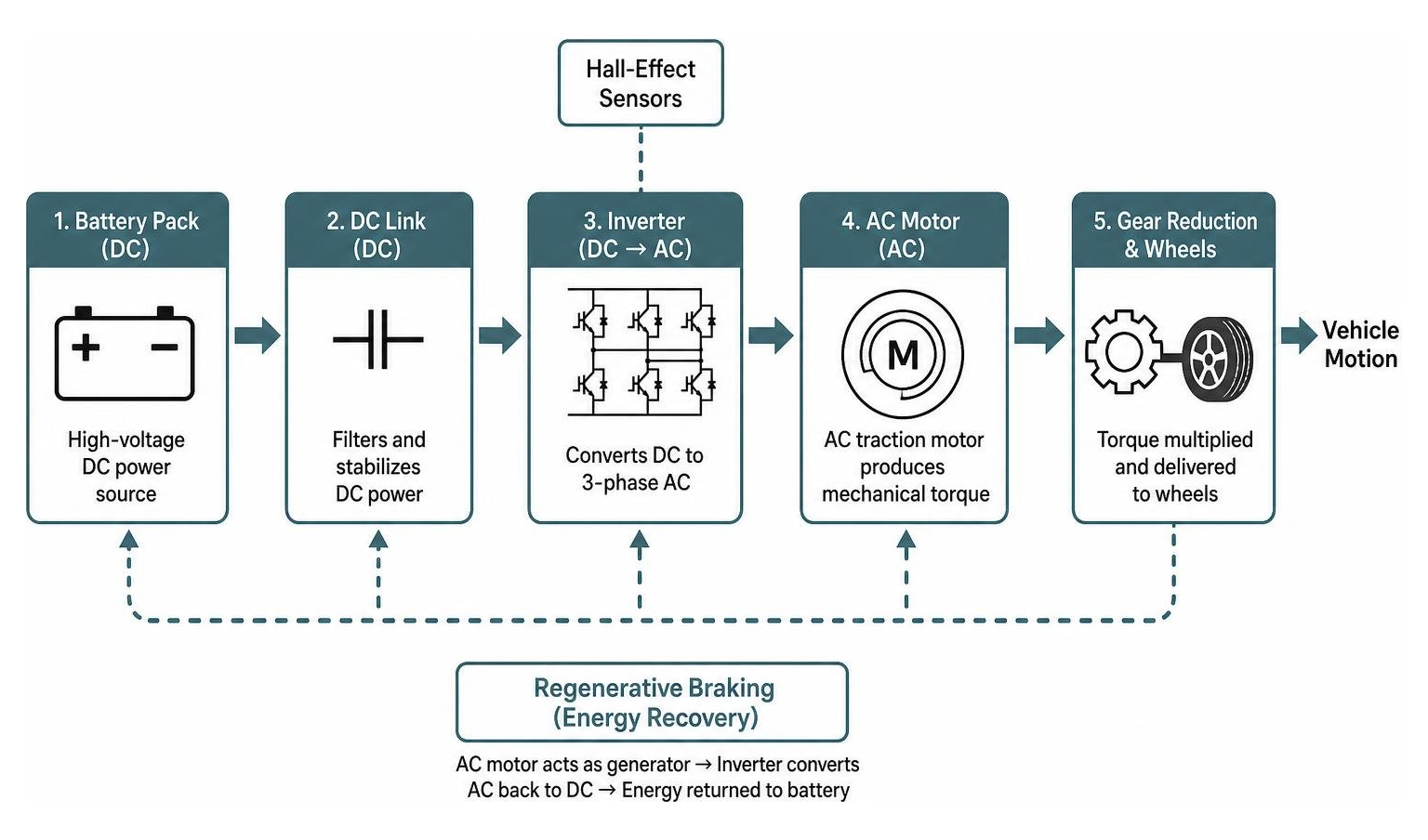
- Superior Power Density: AC motors deliver exceptional power-to-weight ratios. For instance, a Permanent Magnet Synchronous Motor weighing 20 kg can match the continuous mechanical output of a 55 kg standard industrial induction motor.
- Robust Environmental Protection: Sealed AC motors feature no open commutators or exposed brush housings, allowing them to achieve IP67 or IP69K liquid-tight enclosure ratings suitable for underbody EV environments and aggressive industrial washdowns.
- Seamless Regenerative Braking: During vehicle deceleration, an AC traction motor smoothly transitions into an AC generator. The inverter rectifies this AC output back into DC, recharging the high-voltage battery array with high energy capture efficiency.
Industrial Applications of AC Motors Beyond Automotive
Outside the transportation realm, AC motors represent over 70% of the total global industrial motor market. Their rugged build quality makes them the default choice across continuous duty applications:
- HVAC Systems: Industrial fans, chillers, and fresh-air ventilation loops operating continuously under automated VFD control.
- Municipal Infrastructure: High-capacity water treatment pumps, sewage lift stations, and agricultural irrigation networks.
- Heavy Manufacturing: Cement plant kilns, mining rock crushers, and steel mill rolling drives exposed to severe dust and ambient humidity.
- Material Handling: Multi-stage industrial conveyor systems driving continuous production lines.
Specialized Industrial Use Cases for DC Motors
While AC motors dominate continuous heavy-duty processing, DC motors remain ideal in specialized sectors where compact battery integration or linear torque-speed control is paramount:
- Warehouse Logistics & Automated Guided Vehicles (AGVs): Battery-powered sorting vehicles leveraging BLDC motors for dynamic speed adjustments within compact wheel hubs.
- Precision Robotics: Brushless DC servomotors combined with optical encoders for micro-positioning and fast move-and-settle indexing cycles.
- Battery-Powered Tools: Cordless drills, handheld pumps, and portable medical ventilators optimized for direct low-voltage battery consumption.
Key Factors for Selecting Motors in Custom Engineering Projects

Selecting between an ac motor vs dc motor requires balancing immediate capital expenditure against long-term operational performance metrics.
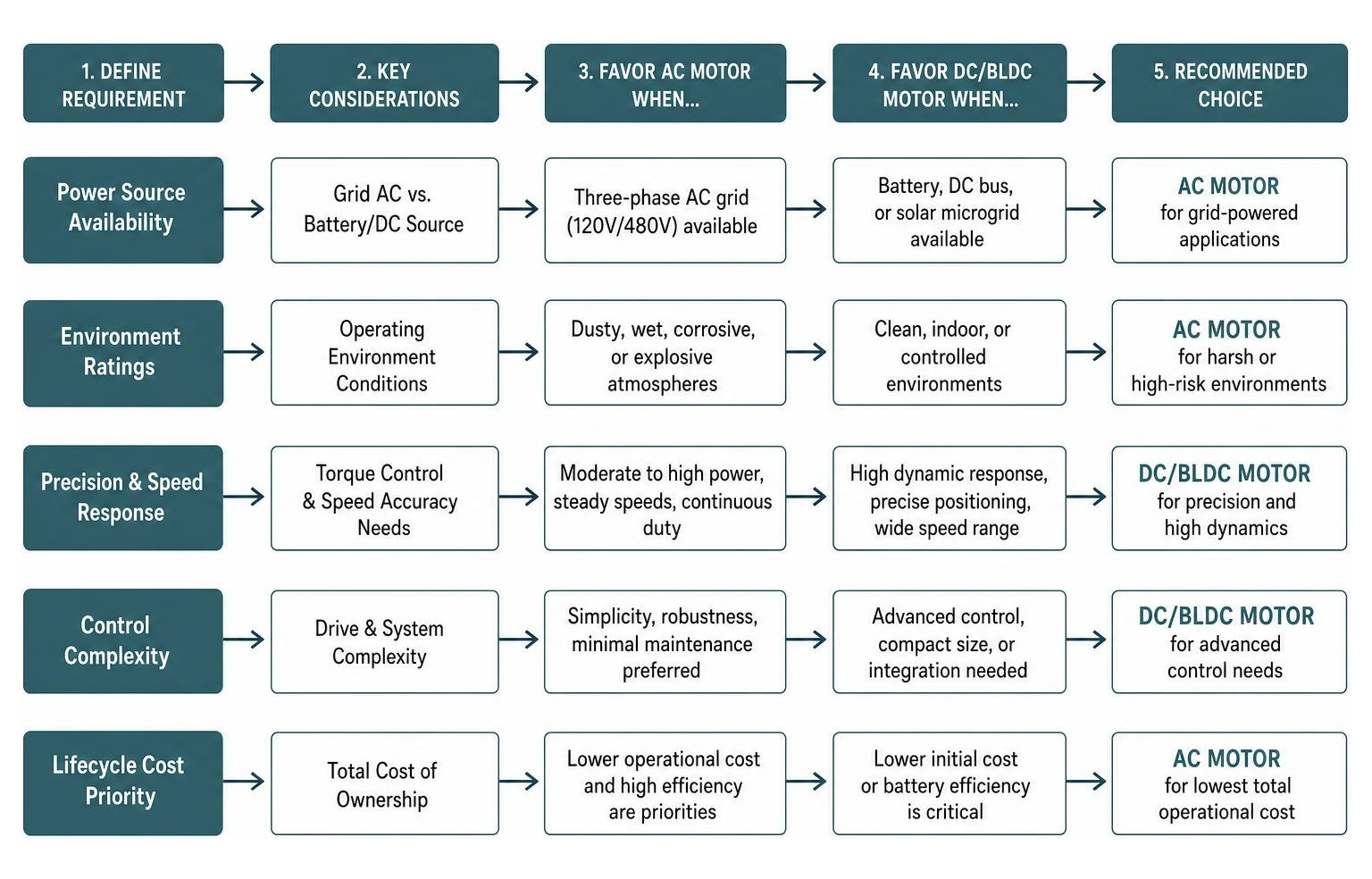
To select the right motor topology for a specific industrial application, consider these key operational parameters:
- Power Source Availability: Direct grid connection (120V/480V AC) favors standard AC induction motors, whereas battery networks or solar microgrids naturally pair with DC or BLDC configurations.
- Environment Ratings: Dusty, washdown, or explosive environments demand totally enclosed fan-cooled (TEFC) or explosion-proof AC motors to ensure long service lives.
- Precision and Speed Response: High-dynamic applications requiring rapid directional shifts (0.1–0.5 second response times) or ultra-precise positioning benefit from BLDC or servo systems managed by advanced Drives and Controls.
Balancing Upfront Capital Costs Against Lifetime Energy Consumption
Purchasing engineers sometimes fall into the trap of prioritizing lower initial hardware costs over long-term operating costs.
A traditional brushed DC motor or single-phase standard AC motor might present a low initial purchase price, but higher energy consumption and recurring maintenance cycles quickly compound operational expenses.
Because electric motors consume roughly 70% of all electrical energy across industrial facilities, upgrading to high-efficiency motors (classified under international standards like IEC IE3, IE4, or super-premium IE5) yields full return on investment through energy savings within months of installation.
Frequently Asked Questions About Electric Motors
Which motor type is more powerful, AC or DC?
AC motors are generally considered more powerful for heavy industrial and automotive applications.
Because they operate without internal mechanical commutators, AC motors can process much higher voltage levels and larger current flows without sparking or thermal breakdown, generating higher output torque density in large industrial footprints.
Why don’t modern EVs use brushed DC motors?
Brushed DC motors are poorly suited for high-voltage EV traction systems due to mechanical friction, brush wear, RPM limits, and poor heat dissipation.
The carbon brushes require periodic replacement, generate ambient carbon dust, and suffer from electrical arcing under heavy acceleration. Modern EVs instead use brushless AC synchronous or induction motors managed by solid-state inverters.
How do variable frequency drives improve AC motor speed control?
Variable Frequency Drives (VFDs) convert incoming AC line power to DC, then synthesize a precisely modulated polyphase AC output signal.
By varying the frequency (Hz) and voltage supplied to the motor, the VFD precisely governs shaft rotational speed and torque without dynamic slip losses, providing smooth acceleration while dramatically reducing line starting current surges.
Conclusion
The shift toward AC traction motors in modern electric vehicles highlights a broader industrial reality: while DC and BLDC motors remain effective for precision robotics, small tools, and direct battery integration, high-power systems demand the efficiency, power density, and durability of AC designs. By pairing solid-state inverters with rugged AC motors, modern powertrains deliver high performance without the mechanical wear of traditional direct current systems.
Whether you are optimizing dynamic automated drives, evaluating equipment lifecycles, or restoring heavy plant machinery, understanding the nuances of the ac motor vs dc motor comparison ensures optimal operational reliability. Explore our complete guide on the structural and electrical Differences of AC DC Motors to select the ideal powertrain technology for your industrial facility.