
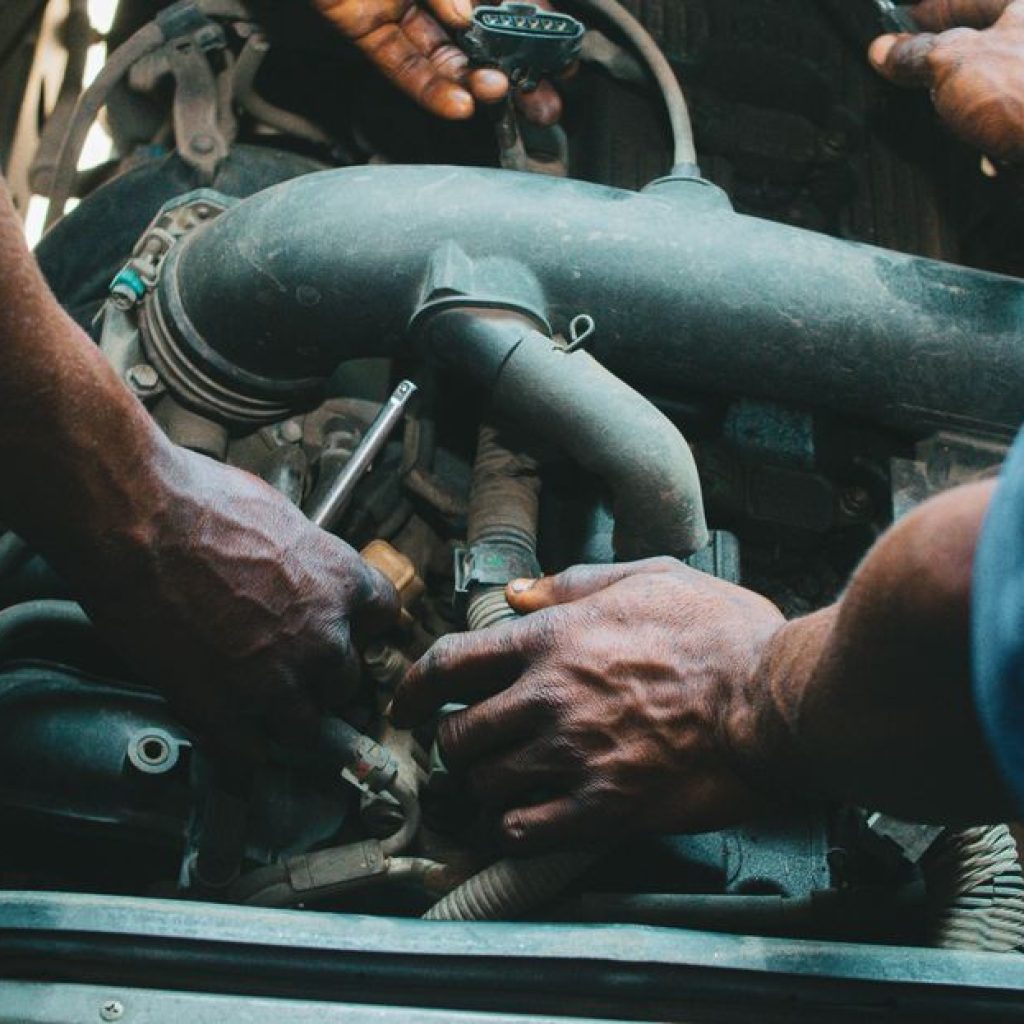
Find Dependable Small Engine Repairs Near You
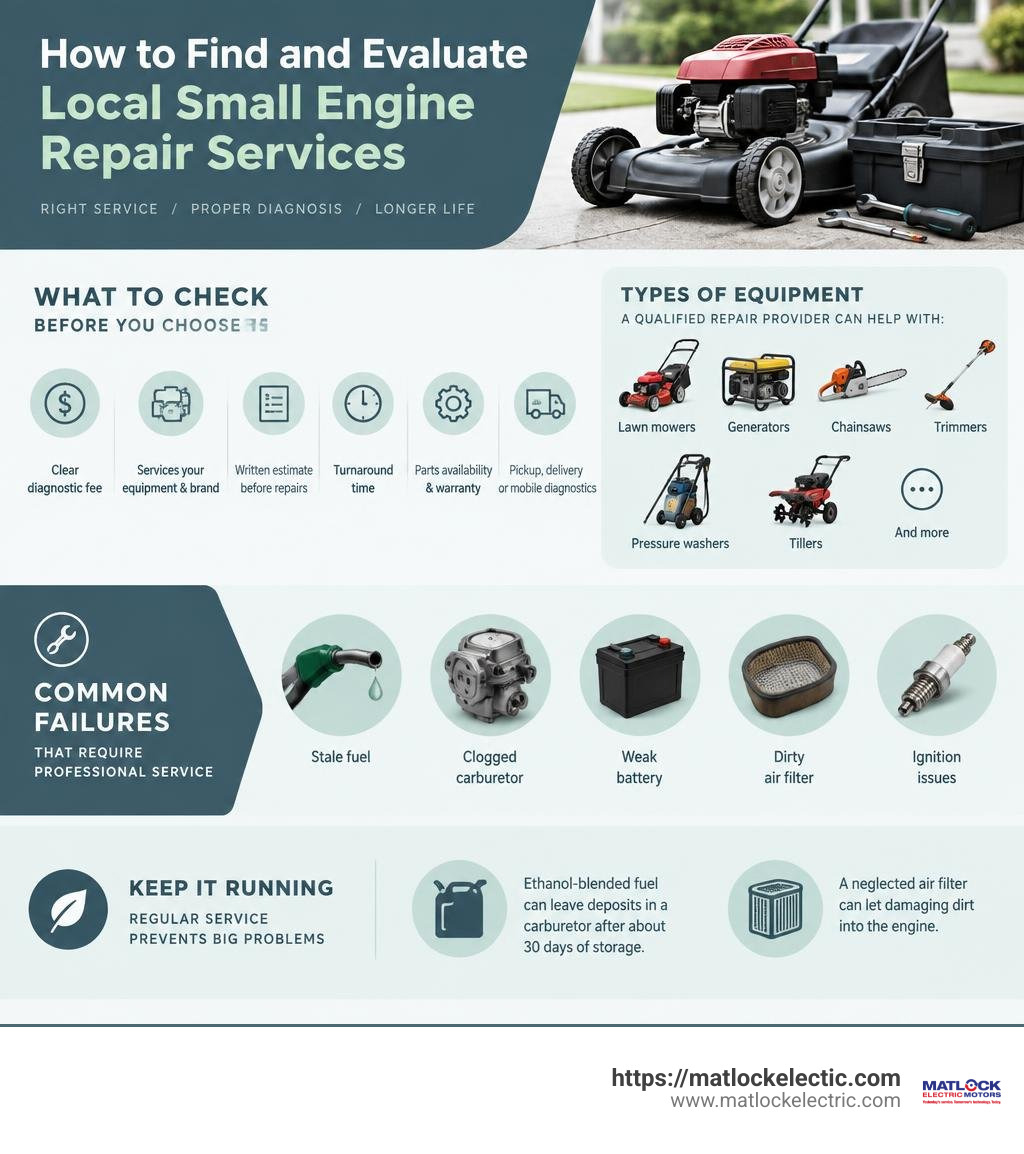
To find dependable small engine repairs near me, start with local shops that clearly explain their diagnostic fee, service the type and brand of equipment you own, and provide a written estimate before repairs begin. Ask about turnaround time, parts availability, warranty coverage, and whether pickup, delivery, or mobile diagnostics are available.
A qualified repair provider can diagnose problems in lawn mowers, generators, chainsaws, trimmers, pressure washers, tillers, and other outdoor equipment. Many no-start problems come down to stale fuel, clogged carburetors, weak batteries, dirty air filters, or ignition issues. Getting a proper diagnosis helps you avoid replacing equipment when a practical repair may restore it.
Regular service also matters. Ethanol-blended fuel can begin to leave deposits in a carburetor after about 30 days of storage, while a neglected air filter can let damaging dirt into the engine. For a broader look at how small engines work and why they fail, the small engine overview from Wikipedia explains the basic designs and common applications behind this equipment category.
This guide explains how to compare local repair options, understand likely costs, decide when repair makes sense, and prevent the most common small-engine failures.
Common Equipment Failures Requiring Professional Service
When outdoor power equipment refuses to cooperate, it often feels like bad luck. In reality, roughly 90% of non-starting equipment suffers from a handful of predictable, preventable issues. Understanding these core failure points helps you determine what went wrong before handing the machine over to a technician.

The primary culprits behind equipment breakdowns include:
- Bad Gas: Modern pump gasoline degrades quickly. When fuel sits untreated, lighter volatile compounds evaporate, leaving heavy varnishes that coat internal passages.
- Dirt Ingestion: A compromised or neglected air filter lets fine abrasive particles enter the combustion chamber. Over time, these particles scour cylinder walls, destroy piston rings, and ruin compression.
- Vibration Damage: High-revving single-cylinder engines generate continuous vibration. Over hours of operation, this loosens fasteners, cracks mounting brackets, and stresses electrical wiring harnesses.
- Overheating: Grass clippings, pine needles, and dirt easily pack into cylinder cooling fins. Without adequate airflow, operating temperatures spike, breaking down engine oil and warping cylinder heads.
- Battery Neglect: Small power equipment batteries often sit idle for months, causing deep discharge and internal sulfation that prevent the starter motor from turning over.
- Oil Starvation: Running an engine low on oil—or failing to change depleted oil—causes rapid metal-on-metal friction that will seize the crankshaft and connecting rod.
Troubleshooting No-Start Conditions and Fuel Issues
The vast majority of equipment failures trace back directly to fuel delivery and spark. Modern ethanol-blended fuel begins breaking down in as little as 30 days of storage. As ethanol absorbs moisture from the air, it separates from gasoline (phase separation) and deposits a sticky, yellowish varnish inside the tiny jets of your carburetor.
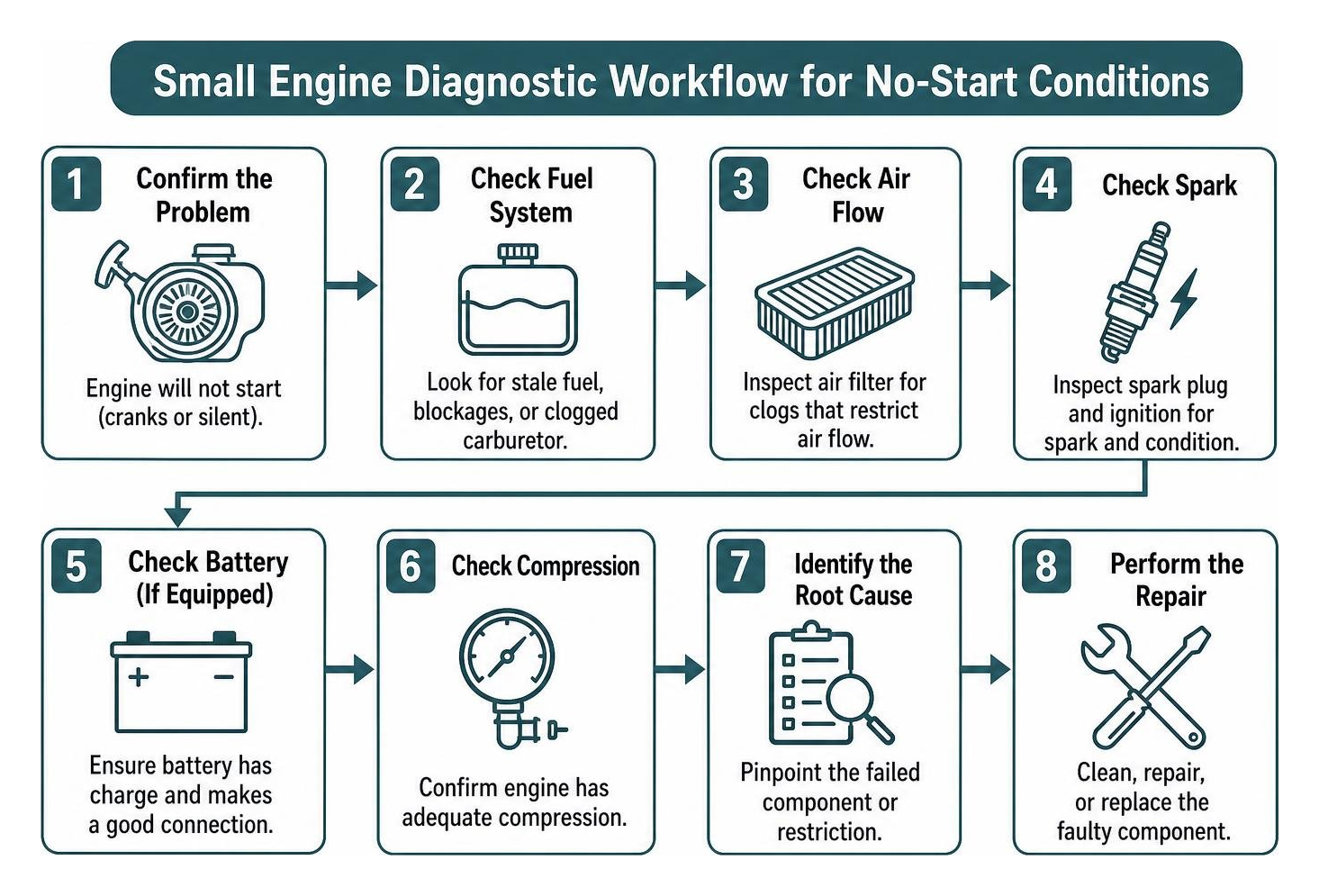
When fuel cannot pass through the pilot jet, the engine may crank endlessly without firing, or it might start briefly on choke and immediately stall out. A fouled spark plug coated in wet fuel or heavy black carbon will similarly prevent combustion. Before assuming the engine is ruined, technicians run a systematic diagnostic process to isolate fuel, spark, and compression.
How to Find Certified Small Engine Repairs Near Me for Heavy Equipment
Commercial zero-turn mowers, multi-kilowatt portable generators, high-pressure washers, and heavy-duty utility engines endure intense workloads. Servicing this class of machinery requires specialized equipment, genuine OEM components, and technicians trained in advanced electrical and drive systems.
When sourcing high-level maintenance, consulting our specialized mechanical repair services checklist helps you identify local facilities equipped for heavy power equipment. Technicians must understand tolerances, hydraulic hydrostatic drives, valve-lash settings, and dynamic load testing to ensure your machinery performs safely under commercial-grade strain.
Evaluating Options for Small Engine Repairs Near Me
Choosing where to take your equipment shouldn’t be a guessing game. A high-quality local repair shop relies on systematic bench testing and dynamic load testing rather than trial-and-error part swapping.

Key qualifications to look for when evaluating repair centers include:
- Transparent Diagnostic Procedures: The shop should measure cylinder compression, ignition coil output, and fuel pressure before recommending major repairs.
- Technician Experience and Certification: Look for technicians trained across major outdoor power brands who use OEM or high-grade equivalent replacement parts.
- Clear Timelines: Professional facilities provide straightforward turnaround estimates based on parts availability and current seasonal backlogs.
- Satisfaction Guarantees: A trustworthy shop stands behind its workmanship with a warranty on installed parts and labor.
Shop-Based vs Mobile Small Engine Repairs Near Me
When equipment breaks down, transporting a 700-pound commercial riding mower or a heavy generator is challenging. Many owners must decide between hauling equipment to a brick-and-mortar facility or scheduling mobile repairs.
| Service Factor | Full-Service Repair Shop | Mobile Small Engine Repair |
|---|---|---|
| Convenience | Requires customer drop-off or shop pickup | Mechanic travels directly to your property |
| Diagnostic Tooling | Full access to stationary bench tools & dynos | Limited to mobile diagnostic kits and hand tools |
| Major Rebuilds | Ideal for engine overhauls & transmissions | Limited to minor parts, tune-ups, and adjustments |
| Weather Dependency | Climate-controlled indoor shop environment | Dependent on driveway, yard, or garage conditions |
| Pickup Options | Often offered (e.g., free within a 5-mile radius) | Built directly into service call fee |
For complex machinery, utilizing dedicated field services and on-site diagnostics gives you the benefit of experienced technicians evaluating your machine in its operating environment before deciding if extensive shop work is needed.
Diagnostic Bench Fees and Labor Rates
Understanding the pricing structure of local small engine shops prevents unexpected bills. Most professional repair centers operate with standardized diagnostic and labor schedules:
- Diagnostic / Shop Minimum Labor: Most shops charge an intake fee of around $75. This covers safety inspections, spark testing, compression checks, and fuel system analysis.
- Hourly Rates: If repairs proceed beyond initial diagnostics, standard labor rates typically run around $125 per hour.
- Maintenance Add-ons: Routine sharpening services remain highly economical, with lawn mower blade sharpening averaging $15 per blade and chainsaw chain sharpening around $12 per chain.
- Introductory Offers: Many local centers provide incentives, such as a $25 discount for new customers on their initial service visit, to earn long-term business.
Always ensure the shop provides a formal estimate before performing any work that exceeds the initial diagnostic fee.
Repair vs. Replace: Making the Right Call for Outdoor Power Equipment
Before investing in major mechanical work, consider the economic life of the machine. Replacing an engine on a 15-year-old mower with a rusted-out steel deck rarely makes financial sense. Conversely, tossing out a commercial-grade machine because of a clogged fuel system or worn starter motor wastes thousands of dollars.
Industry professionals commonly rely on the 50% Rule: if the cost of repair exceeds 50% of the price of a comparable new machine—and the equipment has already surpassed half its expected service life—replacement is generally the smarter choice.
However, a well-built piece of equipment that receives regular maintenance lasts twice as long as neglected machinery. If the deck, chassis, and transmission remain sound, turning to comprehensive mechanical services to rebuild or replace specific engine components preserves your initial investment at a fraction of the cost of new equipment.
Routine Maintenance Habits to Prevent Engine Failure
Preventative care eliminates the vast majority of emergency repair bills. Establishing a few simple habits will keep your power equipment running dependably year after year:
- Treat Stored Fuel: Always add a quality fuel stabilizer to fresh gas cans, or run carburetors completely dry before storing equipment for more than 30 days.
- Inspect Air Filters Monthly: Clean or replace paper and foam air filters regularly. A clean filter prevents abrasive dirt ingestion that destroys cylinder walls.
- Check Oil Levels Before Every Startup: Never operate a 4-stroke engine without confirming oil levels on the dipstick. Follow manufacturer oil change intervals (such as specialized 250-hour oil intervals on advanced filtration systems).
- Balance and Sharpen Blades: Dull mower blades tear grass instead of cutting it, forcing the engine to work significantly harder and run hotter.
- Maintain Battery Charge: Use a smart trickle charger on starter batteries during seasonal winter storage to avoid permanent battery failure.
Frequently Asked Questions About Small Engine Services
What brands and equipment types do small engine repair shops service?
Reputable service centers work across all major outdoor power brands, including Briggs & Stratton, Honda, Kohler, Kawasaki, STIHL, Husqvarna, and Toro. They service push and riding lawn mowers, zero-turn commercial units, portable and standby generators, snow blowers, chainsaws, string trimmers, garden tillers, pressure washers, and log splitters.
How long does a typical small engine turnaround take?
Turnaround times depend on seasonal demand and parts availability. Standard tune-ups, blade sharpening, and carburetor cleanings generally take 1 to 1.5 weeks. Complex repairs—such as complete engine rebuilds, electrical troubleshooting, or hydrostatic transmission overhauls—typically take 2 to 3 weeks. During the peak spring mowing rush, turnaround times may extend slightly across all shops.
How much does professional small engine diagnosis and repair cost?
Most repair centers charge an initial diagnostic bench fee of roughly $75, which covers intake and problem isolation. Standard mechanical labor runs approximately $125 per hour thereafter, plus the cost of replacement parts. Minor routine services, like sharpening mower blades ($15) or chainsaw chains ($12), remain very affordable and help prevent excessive strain on the engine.
Conclusion
Outdoor power equipment forms the backbone of property maintenance, storm readiness, and commercial landscaping. When equipment breaks down, partnering with a dependable local repair shop ensures rapid diagnostics, fair pricing, and professional workmanship that extends the service life of your machinery.
Whether you need routine seasonal maintenance or heavy industrial electromechanical service, the team at Matlock Electric is dedicated to keeping your critical motors and mechanical systems operating at peak performance.