What Reliable Mechanical Service and Repair Means for Your Operations
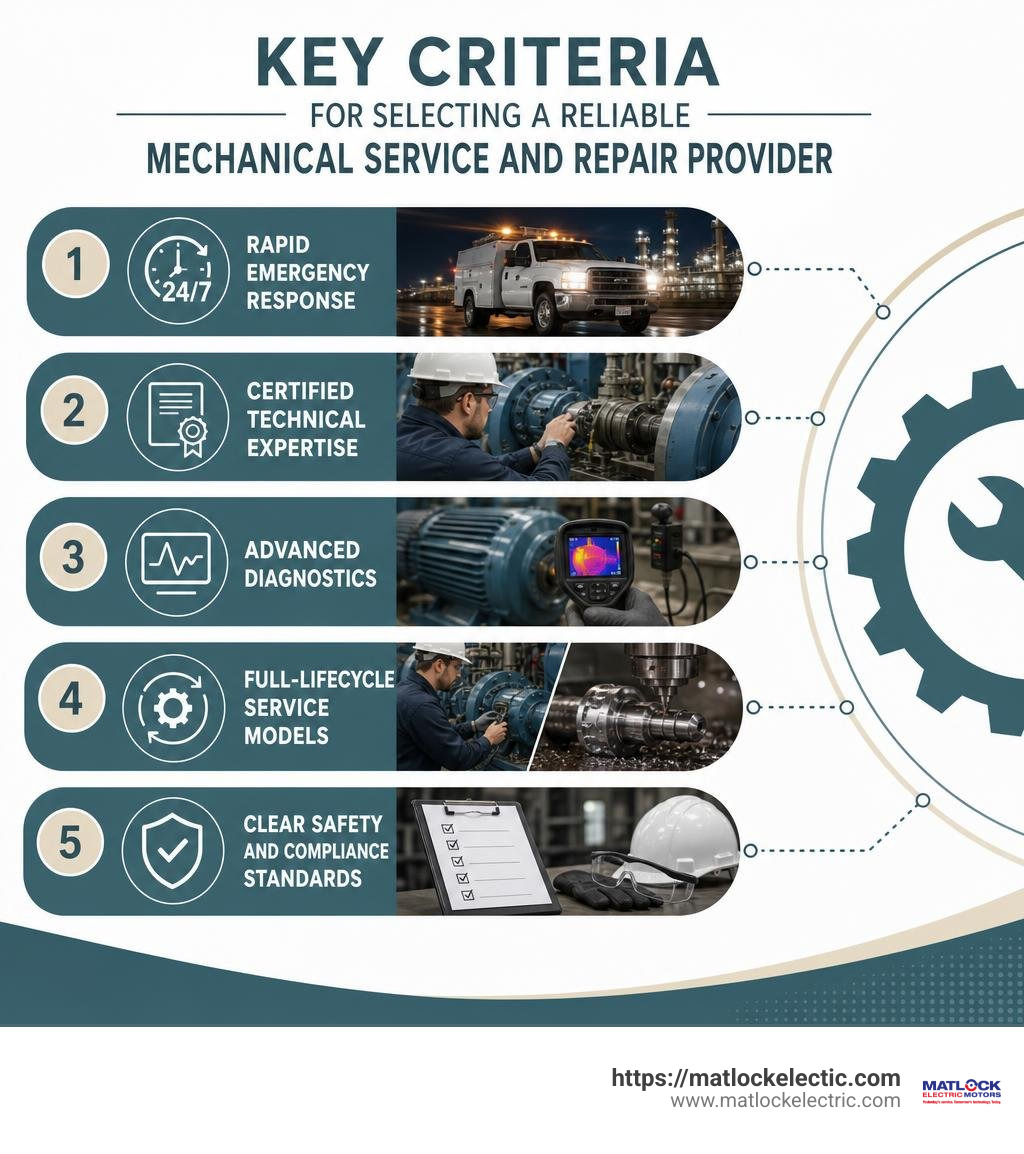
Finding a dependable partner for mechanical service and repair comes down to five critical factors:
- Rapid emergency response: Guaranteed 24/7 dispatch with fully equipped field service vehicles to minimize unplanned downtime.
- Certified technical expertise: Factory-trained technicians qualified across rotating equipment, hydraulics, boilers, power generation, and commercial HVAC systems.
- Advanced diagnostics: In-house capabilities for predictive testing, including vibration analysis, thermal imaging, and non-destructive testing (NDT).
- Full-lifecycle service models: Flexible options combining fast on-site field repairs with precision in-shop machining and rebuilds.
- Clear safety and compliance standards: Verified regulatory testing, transparent service level agreements (SLAs), and OEM-backed parts warranties.
Unplanned machinery failure is expensive. When an industrial drive, critical pump, or facility chiller breaks down, the cost goes far beyond the replacement parts—it stalls production, damages customer trust, and drains revenue.
Proactive facilities do not wait for catastrophic breakdowns. Adopting routine preventative maintenance programs reduces repair expenses, lowers energy usage, and extends the asset lifecycle of mission-critical systems.
Here is the straightforward framework to help you evaluate service providers, maintain equipment reliability, and ensure uninterrupted operational continuity.
Essential Scope: Industrial and Commercial Mechanical Service and Repair Systems
Commercial and industrial facilities rely on a complex network of electromechanical, pneumatic, and hydraulic systems. A single failing component in an assembly line or climate control loop can compromise an entire facility. Reliable mechanical servicing requires an understanding of how these distinct systems interact under heavy production loads.
Core Mechanical Service and Repair Capabilities for Rotating Equipment
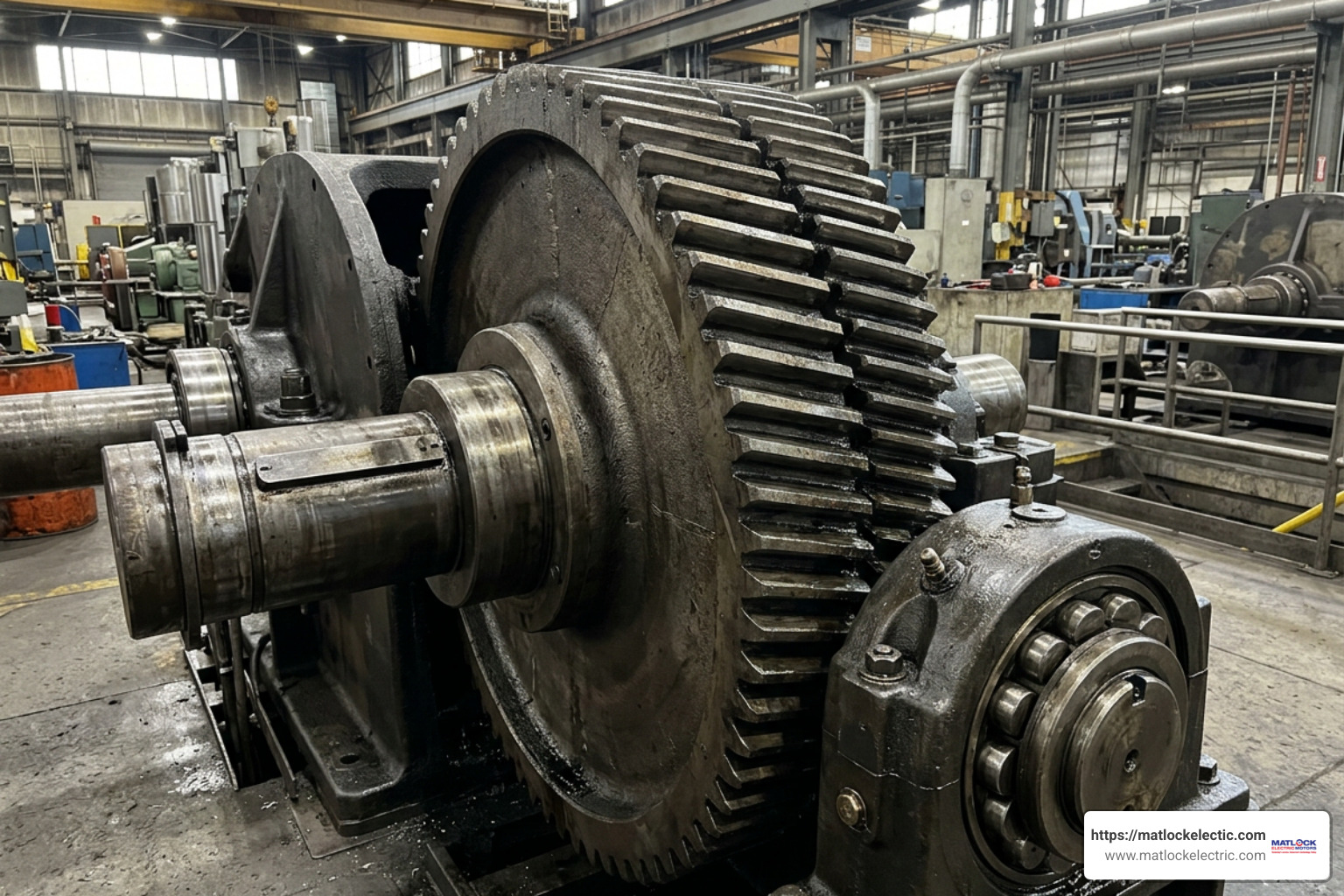
Rotating machinery forms the backbone of manufacturing plants, processing facilities, and material handling systems. When bearings seize, shafts misalign, or gear teeth pit, operational throughput grinds to a halt.
Comprehensive rotating equipment maintenance involves:
- Pumps and Fluid Handling: Regular maintenance and precision overhaul of industrial pumps to handle fluid movement, prevent cavitation, and eliminate seal leaks.
- Gearboxes and Power Transmission: Teardown, gear hobbing, tooth grinding, and realignment of industrial transmissions under high torque demands.
- Motion Control and Drives: Tuning dynamic variable-frequency drives, synchronized motors, and automated drives and controls to maintain speed regulation.
- Bearings and Custom Machining: Pouring and machining custom Babbitt bearings for heavy turbomachinery, alongside hand-fitting custom bronze bearings for stamping presses and metalworking tools.
Facility-Critical Infrastructure and Power Generation Assets
Beyond production machinery, primary building infrastructure requires rigorous mechanical oversight to maintain occupant safety, environmental control, and regulatory compliance.
- Commercial HVAC and Climate Systems: Routine maintenance on heavy chillers, rooftop units (RTUs), and modern Variable Refrigerant Flow (VRF) systems to preserve energy efficiency and indoor air quality.
- Emergency Power Generation: Rapid servicing, load banking, and mechanical overhaul of industrial diesel and natural gas backup generators (including systems from manufacturers such as Cummins, CAT, Generac, Kohler, and MTU).
- Boilers and Pressure Vessels: Periodic safety inspections, burner tuning, and CSD-1 boiler testing to satisfy municipal codes and avoid catastrophic pressure loss.
- Plumbing and Environmental Systems: Testing Reduced Pressure Zone (RPZ) backflow preventers to protect drinking water, alongside maintaining sump pumps, lift stations, and commercial drainage networks.
Proactive Maintenance Strategies: Maximizing Equipment Reliability and Uptime
Operating on a purely reactive basis—waiting for machinery to fail before calling a technician—is the most expensive way to manage a facility. Evaluating is your plant maintenance proactive or reactive helps identify blind spots before minor wear turns into catastrophic failure.

Safety Audits, Environmental Compliance, and Regulatory Checks
A dependable service partner ensures your mechanical infrastructure complies with local, state, and federal safety mandates.
- Combustion and Emissions Analysis: Older heating and industrial combustion assets require certified combustion analysis. For instance, municipal codes often mandate formal HVAC safety performance checks once systems reach 10 years in service.
- Carbon Monoxide (CO) Monitoring: In enclosed environments, boiler rooms, and underground parking structures, annual calibration and testing of CO sensors prevents toxic gas accumulation.
- Cross-Connection and Water Safety: Certified annual RPZ valve backflow testing safeguards the potable municipal water supply against chemical and biological back-siphonage.
Planned Maintenance Protocols to Mitigate Costly Emergency Shutdowns
Planned preventative maintenance schedules stabilize operational budgets by finding component wear early.
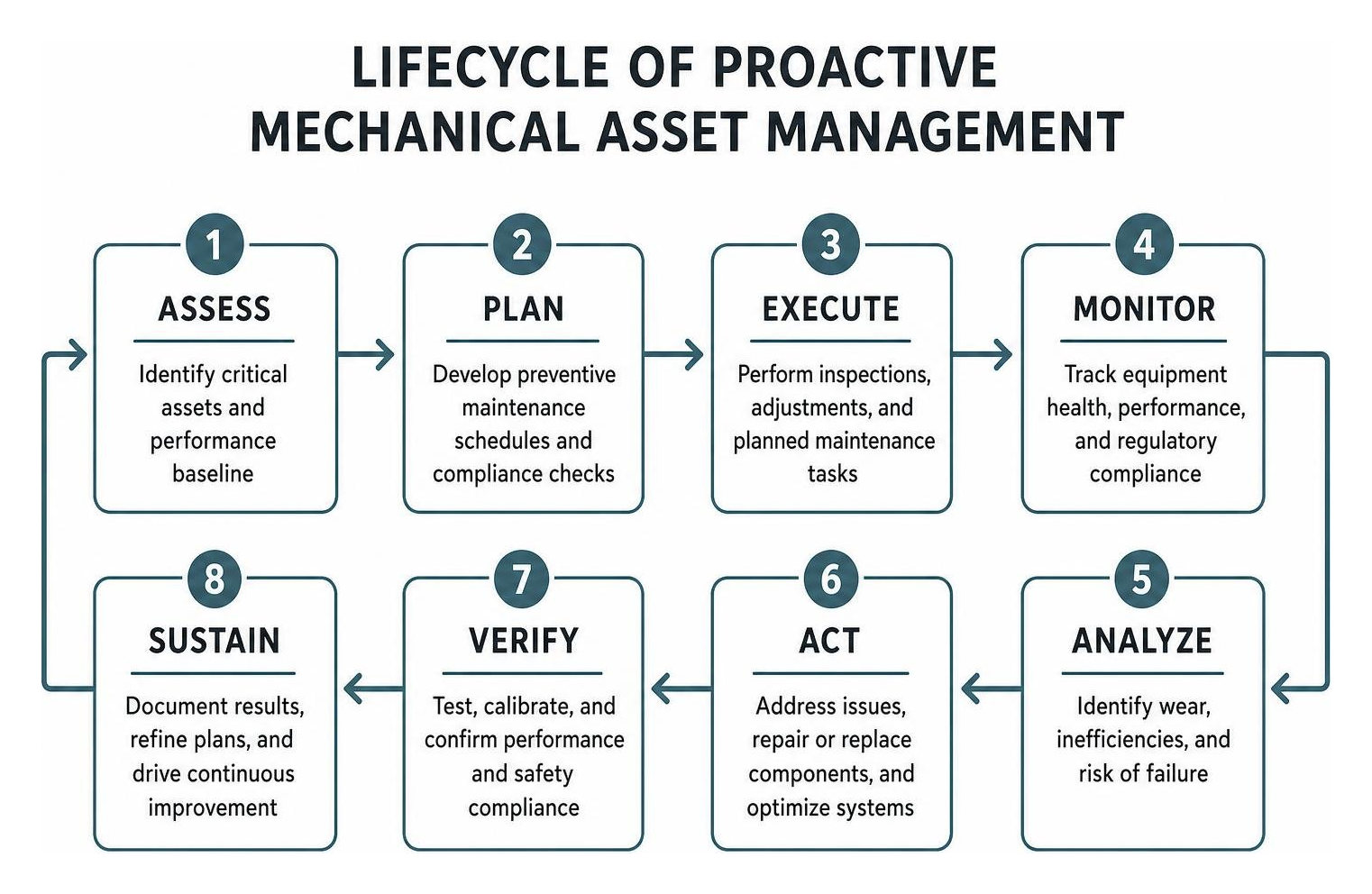
Key proactive maintenance protocols include:
- Laser Shaft Alignment: Eliminating angular and parallel misalignment between motors, gearboxes, and driven loads to reduce premature bearing wear.
- Centralized Lubrication Audits: Confirming automated single- and multi-point lubrication delivery systems are distributing clean grease or oil at the correct viscosity.
- Dynamic Balancing and No-Load Testing: Balancing rotating impellers, rotors, and shafts before returning overhauled machinery to production.
- Seasonal Weatherization: Winter freeze-protection protocols for rooftop air handlers, cooling towers, and external fluid lines to prevent burst pipes and cracked casings.
The Modern Diagnostic Toolkit: Advanced Technology in Mechanical Servicing
Modern mechanical servicing combines mechanical craftsmanship with advanced digital diagnostic tools. Utilizing modern technology in diagnostics removes guesswork, allowing technicians to pinpoint internal machine faults without unnecessary teardowns.
Integrating Predictive Diagnostics and Thermal Analysis
Understanding the story behind thermal imaging highlights how non-invasive infrared inspections identify electrical hot spots, unbalanced thermal loads, and bearing friction before components overheat.
| Diagnostic Technology | Primary Application | Problem Detected |
|---|---|---|
| Vibration Analysis | Rotating shafts, pumps, blowers | Imbalance, misalignment, bearing raceway damage |
| Infrared Thermography | Electrical panels, motors, gearboxes | High-resistance connections, mechanical friction |
| Borescope Inspection | Sealed gearboxes, turbines, cylinders | Internal gear pitting, cracked teeth, scoring |
| Magnetic Particle Testing | Machine tool frames, crankshafts, welds | Microscopic surface and subsurface metal fatigue |
| Resistance Testing | Stators, field coils, windings | Turn-to-turn shorts, phase-to-ground insulation breakdown |
Combining physical diagnostics with troubleshooting motors a practical guide to resistance testing gives our technicians a complete view of electromechanical health.
Building Automation Systems and Energy Optimization
Commercial facilities benefit from integrating mechanical systems into centralized Building Automation Systems (BAS). Networked IoT sensors track real-time differential pressures, fluid flow rates, energy draw, and zone temperatures.
These integrated systems give facility engineers automated alerts when chillers or air handlers run outside normal parameters, making it easy to schedule corrective service before efficiency drops.
Field Services vs. Shop Overhauls: Deployment Models and Parts Sourcing
Deciding whether to perform repairs on-site or transport equipment to a dedicated service center depends on machine size, breakdown severity, and required tooling.
| Feature | On-Site Mobile Field Service | Comprehensive Shop-Based Overhaul |
|---|---|---|
| Best For | Emergency breakdowns, fluid leaks, alignment | Total rebuilds, machine-way scraping, rewinds |
| Turnaround Time | Immediate to hours | Days to weeks (dependent on machining scope) |
| Logistical Impact | Zero transport logistics; work done on-site | Requires riggers, freight transit, handling |
| Tooling Capability | Mobile diagnostics, portable line boring | Heavy vertical boring mills, dynamic balancing, burn-out ovens |
| Testing Scope | Operational live testing under site conditions | Controlled no-load testing and dynamometer runs |
Evaluating Field vs. Shop Mechanical Service and Repair Solutions
For massive stationary systems, disassembling and transporting the machine is often cost-prohibitive. Dedicated field services bring mobile diagnostic units, portable line-boring tooling, and certified welders directly to your plant floor to execute critical repairs on-site.
Conversely, extensive overhauls—such as regrinding crankshafts, remanufacturing machine ways, or pouring new Babbitt bearings—require the tooling of a dedicated machine shop.
Component Overhauls and Complete Asset Reconditioning
When machinery undergoes shop-level reconditioning, technicians execute complete teardowns and structural restorations:
- Machine Tool Reconditioning: Comprehensive precision repair restoring machine tool ways via hand scraping and half-mooning for optimal lubrication retention.
- Motion and Positioning Repairs: Highly calibrated servo motor repair ensuring exact encoder feedback and dynamic response.
- Motor Overhauls: Heavy-duty ac repairs and precision dc repairs spanning total rewinds, commutator turning, and dynamic balancing.
- Hydraulics and Clutches: Honing hydraulic cylinder barrels, repacking high-pressure seals, and relining friction clutches on metal stamping presses.
Vetting Service Providers: Qualifications, Safety Standards, and Emergency Protocols
Choosing the right mechanical contractor requires more than comparing hourly billing rates. An unqualified repair technician can easily misdiagnose a failure, creating repeat downtime and voiding equipment warranties. Our guide on how to keep your business humming finding reliable local electric motor repair outlines core best practices when reviewing technical credentials.
When evaluating a new service partner, use this quick qualification checklist:
- [ ] Safety and Background Clearances: Technicians are drug-tested, background-checked, and trained in OSHA lock-out/tag-out (LOTO) and confined space protocols.
- [ ] Factory Authorizations: Verified factory certifications for your specific makes of generators, compressors, and motor drives.
- [ ] Transparent Pricing & SLAs: Clear, written service agreements detailing emergency call-out fees, mileage rates, and guaranteed arrival windows.
- [ ] Modern Fleet Deployment: Mobile repair vehicles stocked with common replacement seals, bearings, belts, and specialized diagnostic instruments.
- [ ] Warranty Management: Proven track record of honoring OEM parts warranties and providing written craftsmanship guarantees on rebuilds.
Rapid Response Capabilities and Emergency Support
When mission-critical systems fail at 2:00 AM, you need direct access to a qualified technician rather than an automated answering service. Look for providers that offer dedicated emergency phone lines, dispatch zones, and guaranteed arrival times.
Evaluating Warranty Coverage and Brand Specialization
Ensure your service provider sources genuine OEM parts or engineered replacements meeting OEM tolerances. Working with a multi-brand repair specialist provides access to extensive parts networks, cylinder exchange programs, and factory-grade remanufacturing procedures.
Frequently Asked Questions About Mechanical Services
What is the difference between preventative and predictive mechanical maintenance?
Preventative maintenance follows a calendar or runtime schedule (such as changing oil every 500 operating hours or replacing belts semi-annually) regardless of condition. Predictive maintenance uses real-time diagnostic sensors—such as vibration analysis, oil spectrometry, and thermal imaging—to track machine degradation, allowing you to service components right before failure occurs.
How do I determine whether to repair or replace a failed mechanical asset?
Use a life-cycle cost analysis. If the repair cost exceeds 50% of the replacement cost, or if the asset operates on outdated, energy-inefficient architecture, replacement is usually the better investment. If the machine’s primary casting and structure are sound, an engineered shop rebuild can restore original OEM tolerances at a fraction of new equipment costs.
When is mobile on-site repair preferred over sending equipment to a repair shop?
Mobile on-site repair is preferred for large stationary equipment, minor hydraulic leaks, emergency diagnostics, and repairs where the cost and downtime of rigging, trucking, and reinstalling the machinery exceed the scope of the repair.
Ensure Reliable Facility Performance
Selecting a mechanical service partner is an investment in your plant’s uptime and profitability. Partnering with certified technicians who combine fast emergency dispatch, advanced predictive tools, and full in-shop machining capabilities protects your operation from unplanned disruptions.
Explore our industrial and commercial mechanical services to see how our field technicians and service facilities support your equipment’s full lifecycle.